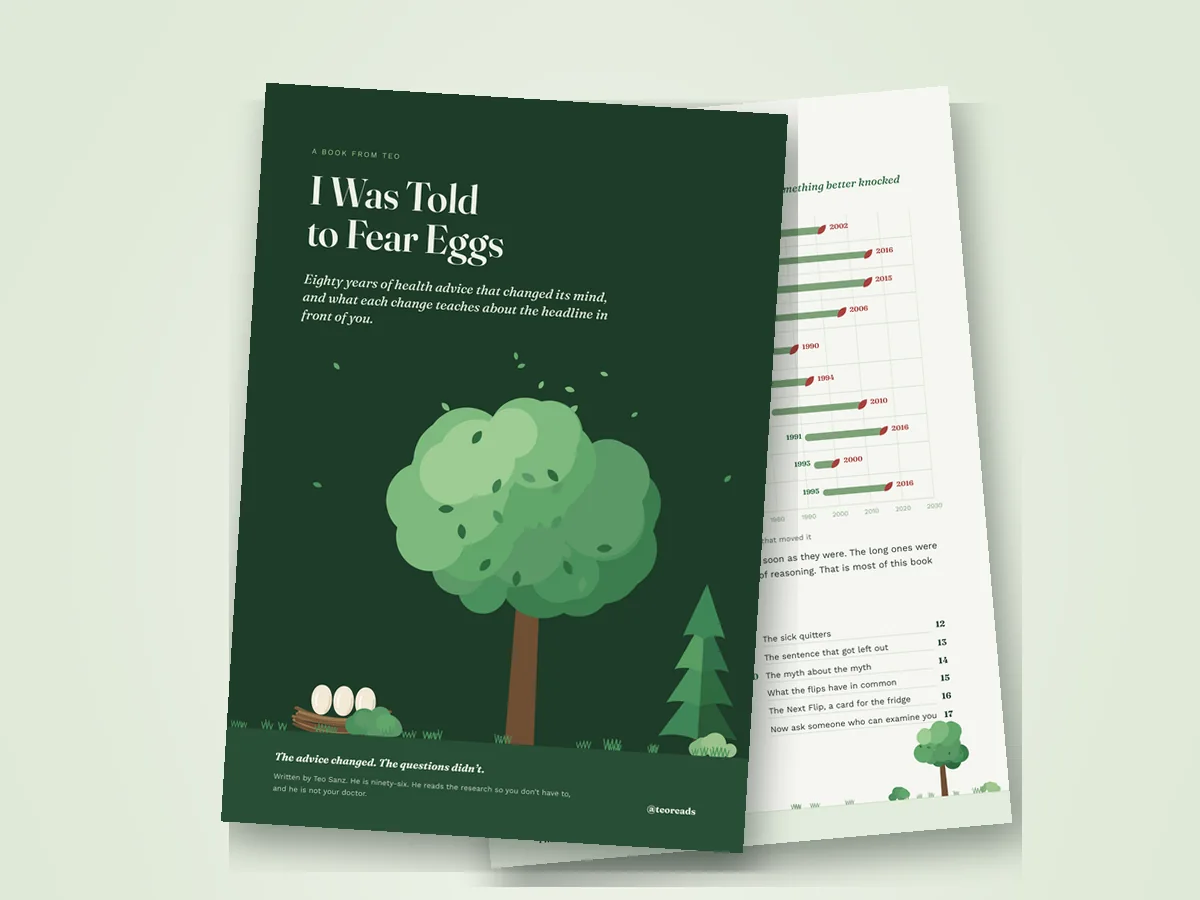
What's inside
- Ten real flips, from eggs and margarine to coffee, the daily drink and eight glasses of water: who said it, when, and what changed
- A chart of how long each piece of advice stood, and the paper, trial or ruling that moved it
- The numbers from the trials shown as people per hundred or per thousand, not just percentages
- The receipts: every study, report and ruling named, so you can read them yourself
- A table of what the flips have in common, and the question each one teaches
- The Next Flip: a cut-out card of ten questions for the fridge
Look inside
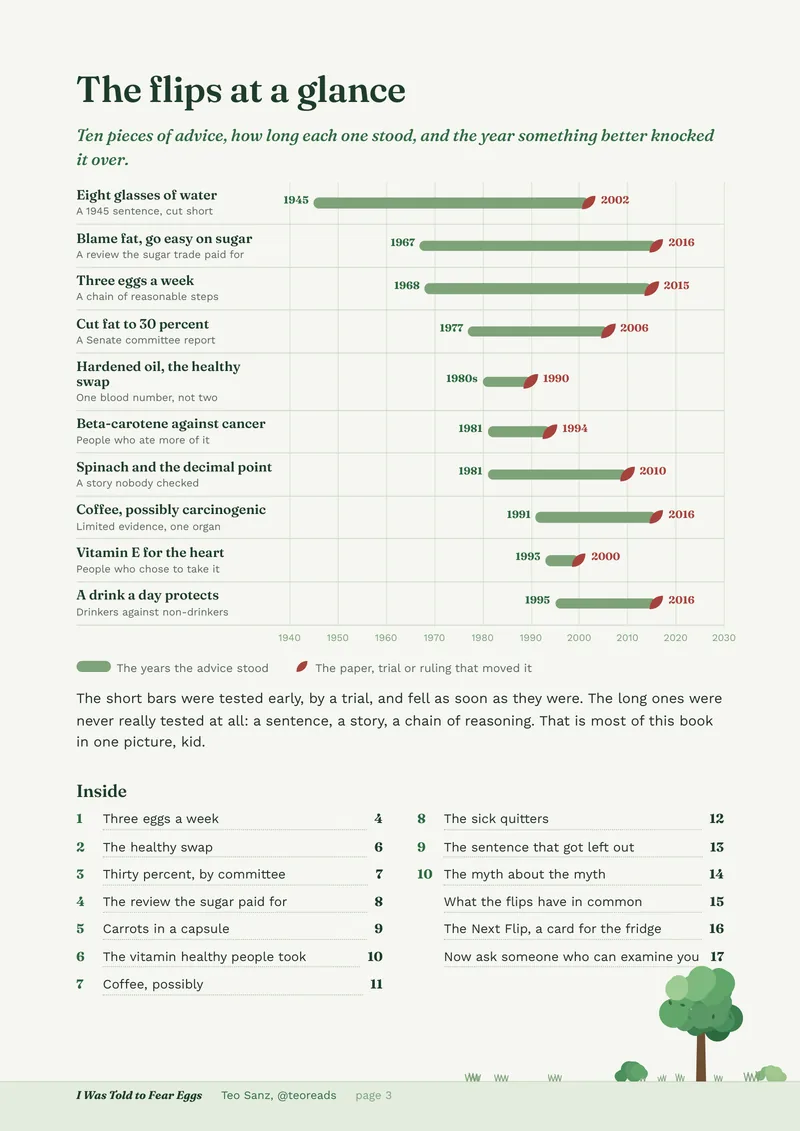
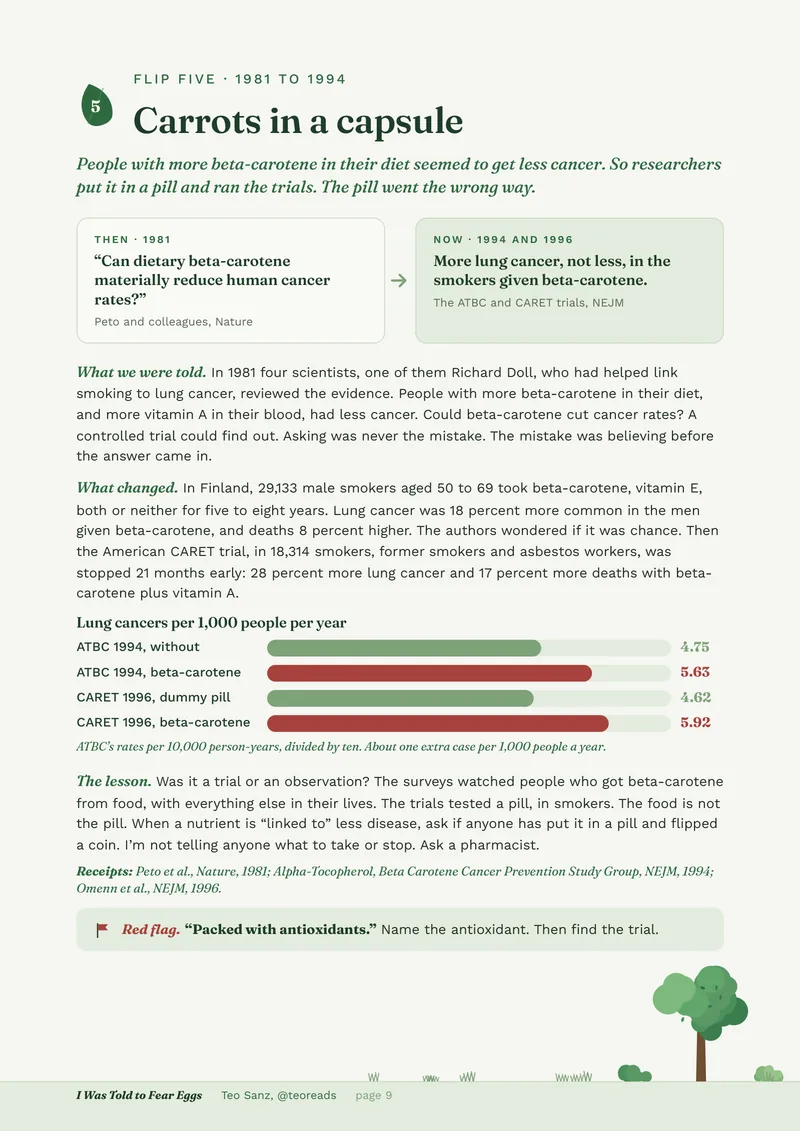
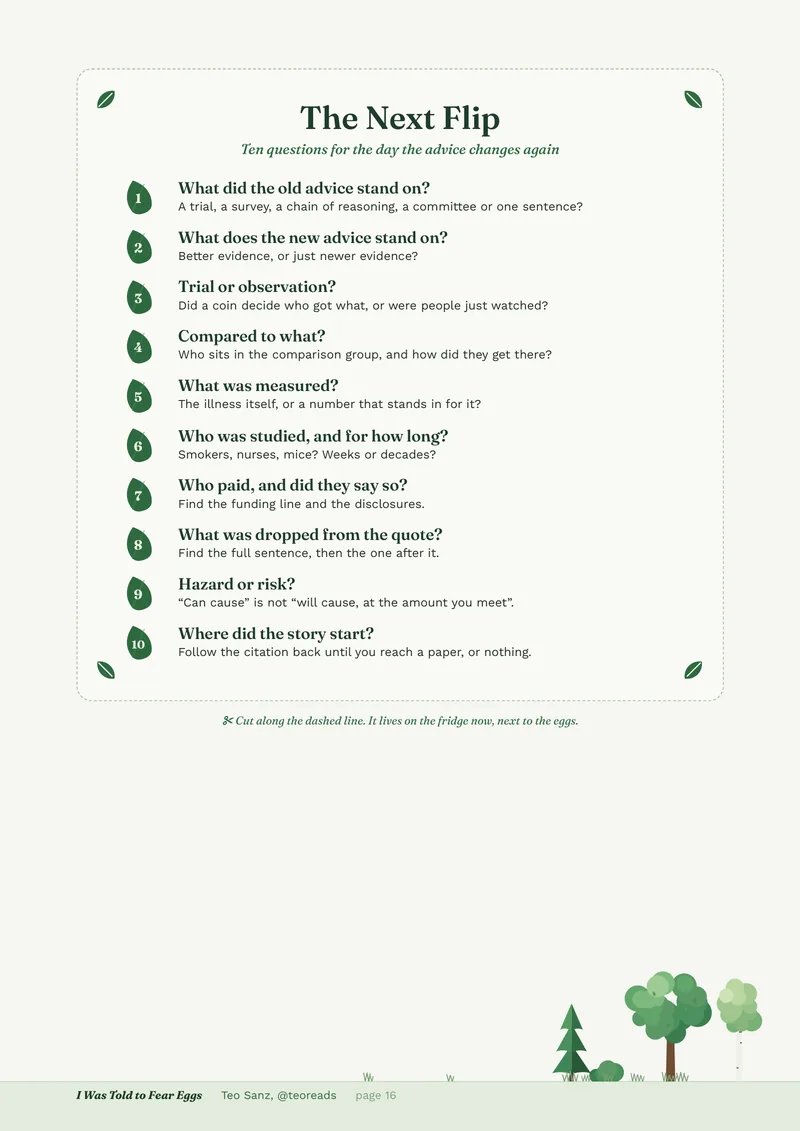
Real pages from the file. Tap one to see it larger.
About it
I'm Teo. I'm ninety-six, and I'm old enough to have been told to fear eggs, then butter, then margarine, then fat. I've watched each piece of advice change its mind. This book is about how that happens, and what it teaches you about the headline in front of you today.
It walks through ten real flips: the three eggs a week of 1968, the hardened-oil swap that brought in trans fats, the Senate's 1977 fat target, a 1967 review the sugar trade paid for, beta-carotene and vitamin E pills, coffee's cancer label, the sick quitters behind the healthy-drinker curve, the missing sentence behind eight glasses of water, and the spinach decimal point nobody can find.
Each chapter shows what people were told and by whom, what changed and why, and the one question that would have caught it: was it a trial or an observation, compared to what, who paid, what was dropped from the quote. The receipts are on every page, so you can check me.
This is not "the experts are always wrong". Most advice moved because somebody ran a better study. That's science working, slowly. And it won't tell you what to eat, drink or take. Not once. I'm not your doctor, and nothing in it is medical advice.
You get a 17-page A4 PDF with charts, a table of what the flips have in common, and a cut-out card of ten questions for the day the advice changes again.
A page from it
The title is not a figure of speech. I’m old enough to have been told to fear eggs, then butter, then margarine, then fat, and old enough to have watched each piece of advice change its mind. These days my grandchildren ask whether eggs are good or bad this year. This book is my long answer.
Here is what this book is not. It is not “the experts are always wrong”. Most of the time the advice moved because somebody ran a better study. That is science working, slowly and in public. It is annoying. It is also the only thing that has ever worked.
Questions
What format is it, and can I print it?
Who is it for?
Is this medical or nutritional advice?
Will it tell me what to eat?
Are the sources real?
Does it say the experts are always wrong?
Also in the shop
Download
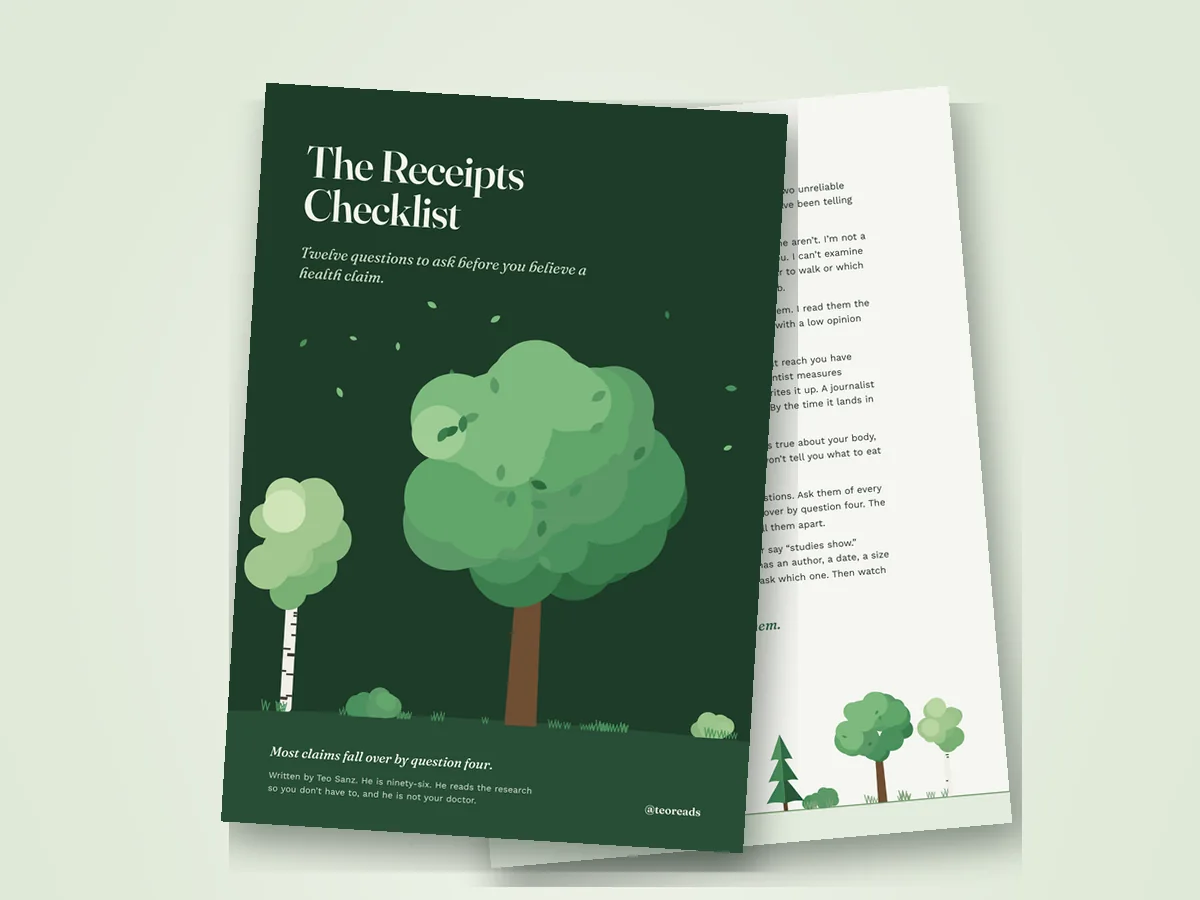
The Receipts Checklist
Twelve questions to ask before you believe a health claim, each with a real case, the paper to look up and the red flag that gives it away.
Download
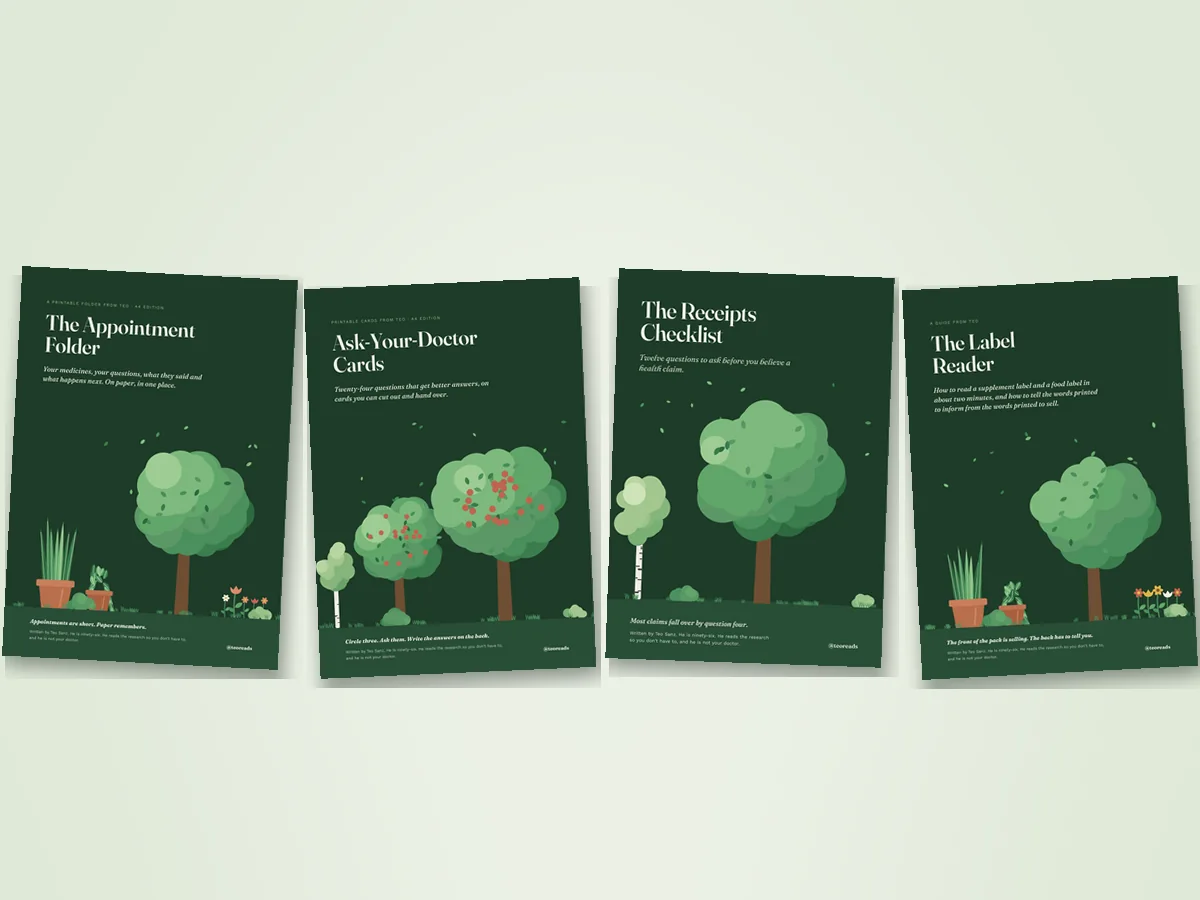
The Parents Pack
For the family member who goes to the appointments: the folder, the question cards, the label reader and the receipts checklist, in one pack.
Download
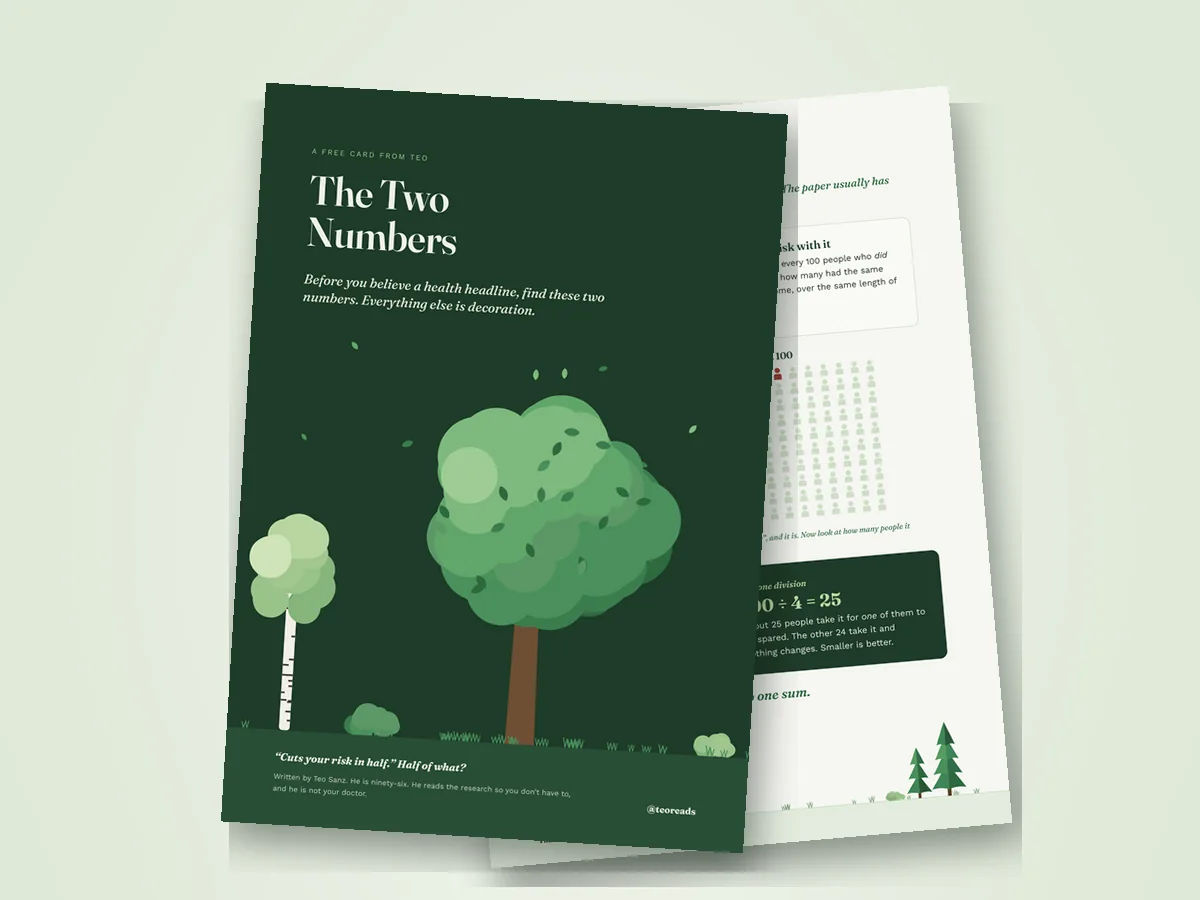
The Two Numbers
A free card for the fridge. Before you believe a health headline, find these two numbers: the risk without it, and the risk with it.