What's inside
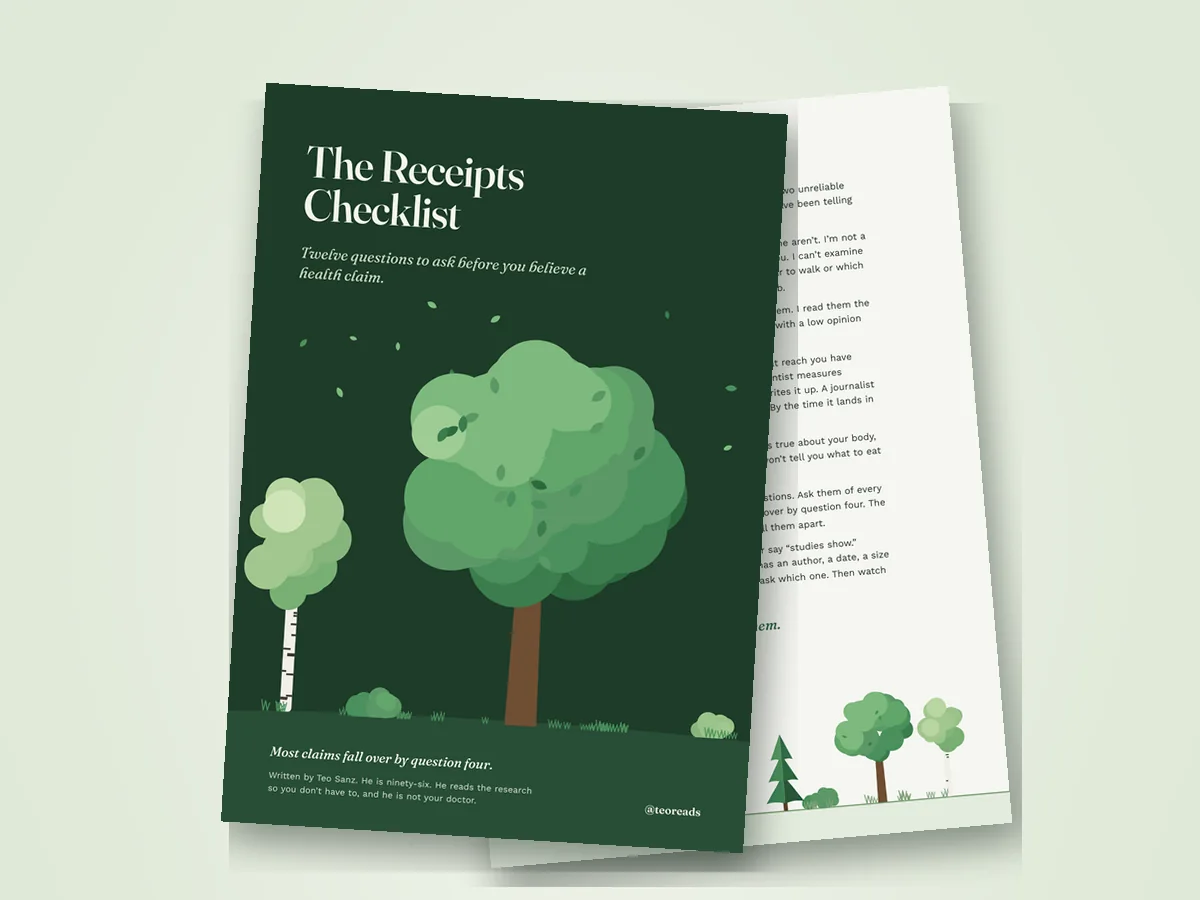
- An 11-page PDF guide, written by Teo
- Twelve questions, in the order to ask them
- A real case for each question, with the paper named
- The Red Flag Glossary: fifteen sales phrases, translated
- A fridge card with all twelve questions
Look inside
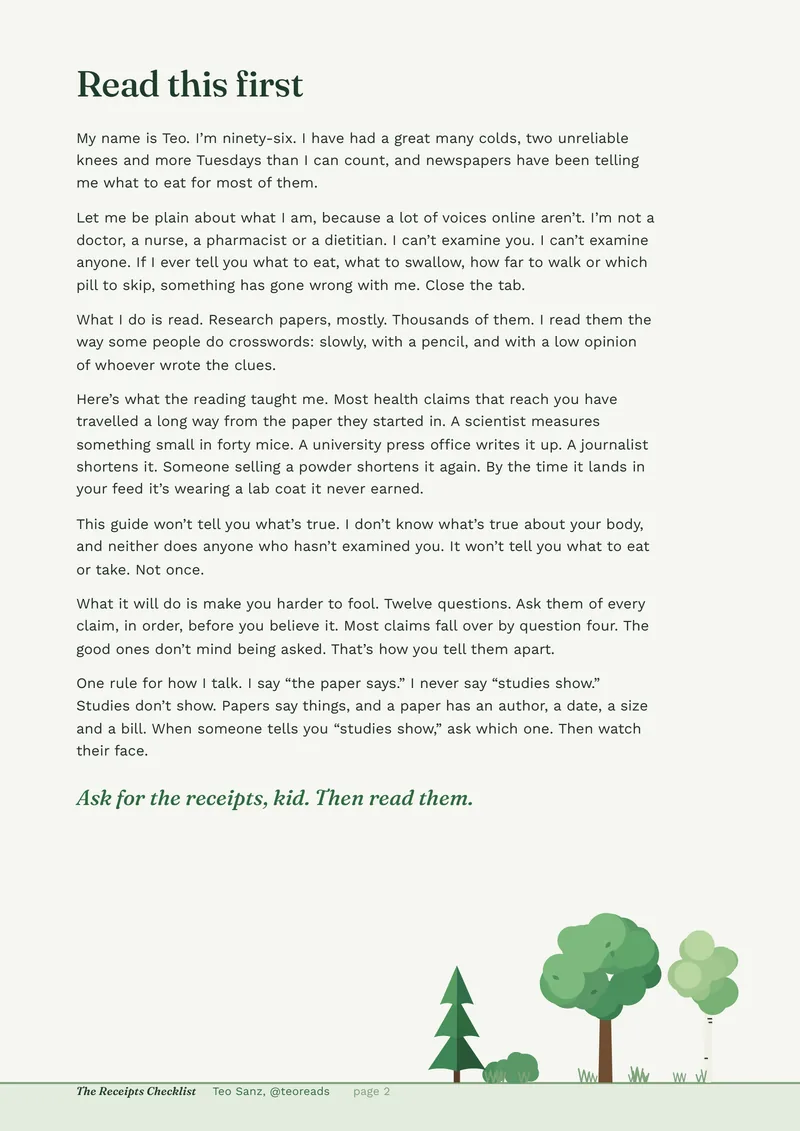
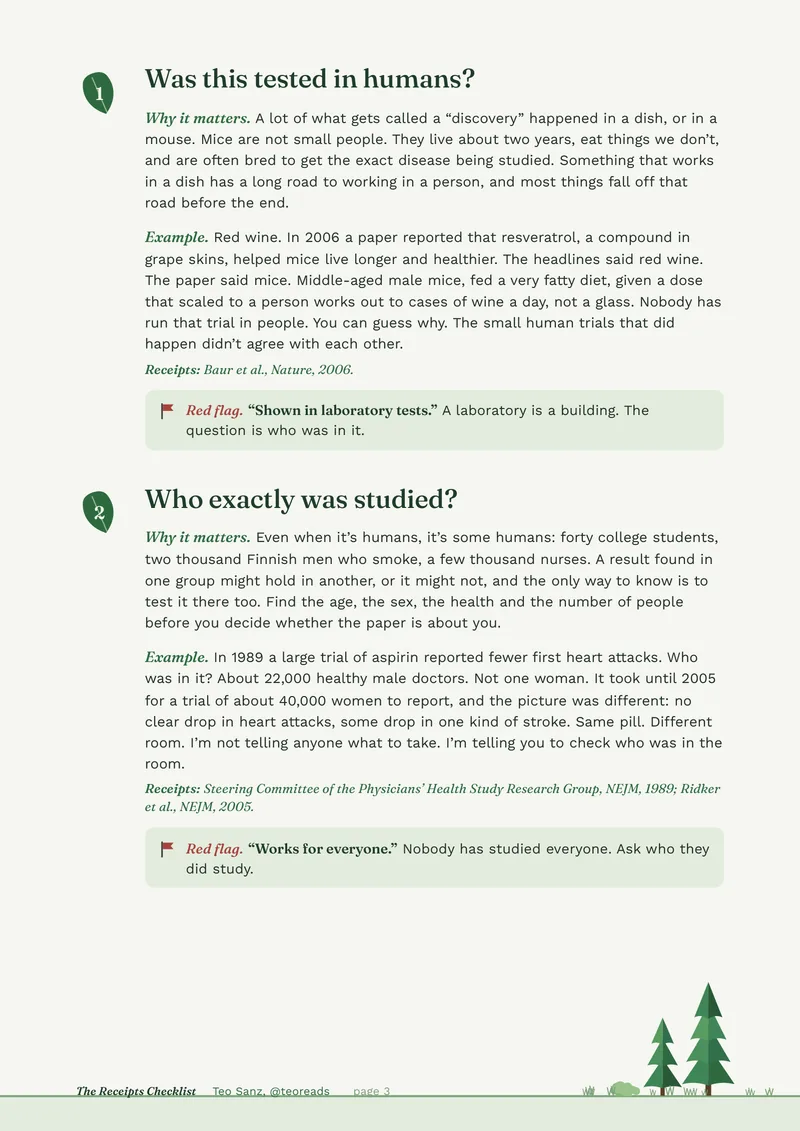
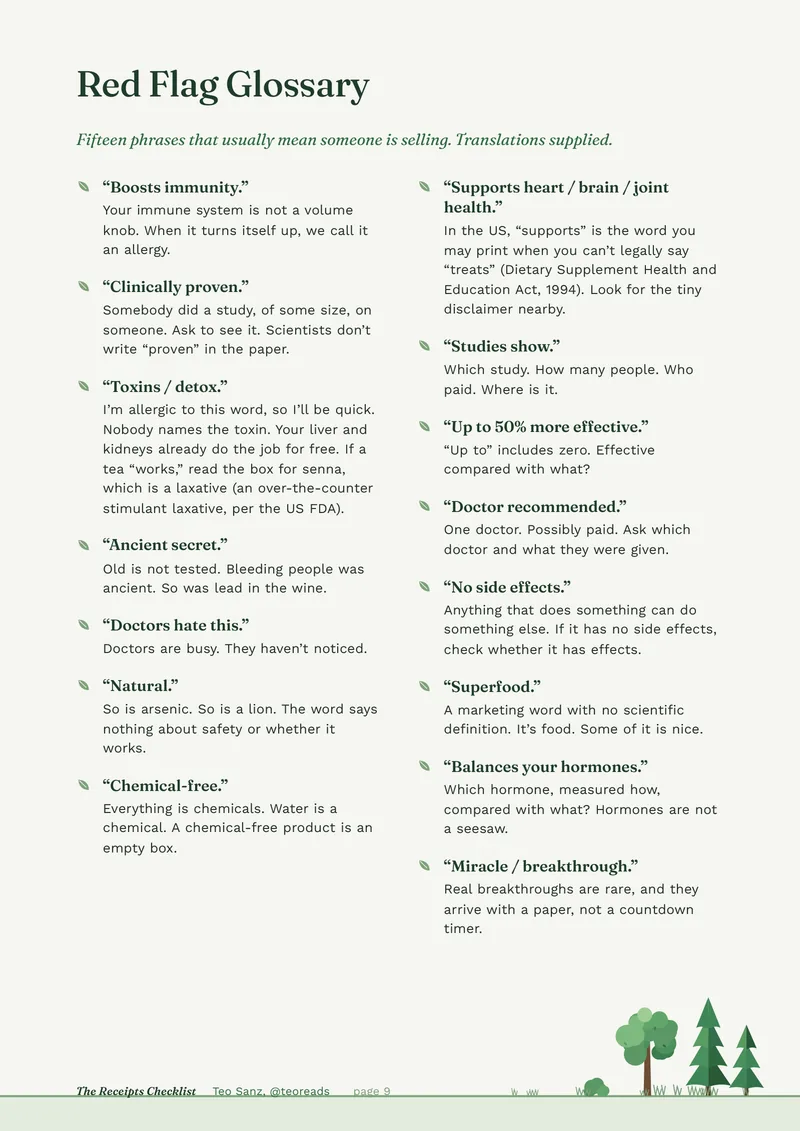
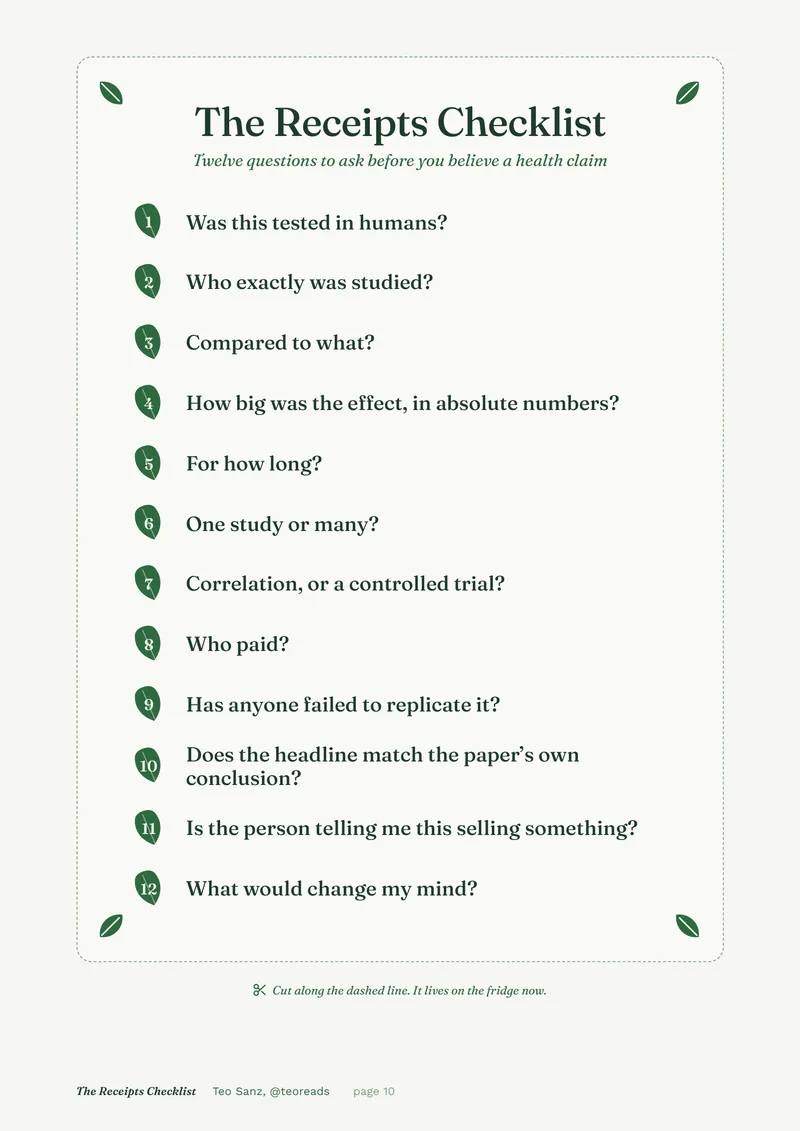
Real pages from the file. Tap one to see it larger.
About it
A claim with no receipts is a rumour with good lighting.
This is the list of receipts I ask for, in the order I ask. Was it tested in humans. Who exactly was studied. Compared to what. How big was the effect, in absolute numbers. For how long. Who paid. Most claims fall over by question four.
Every question comes with a real case: the aspirin trial with no women in it, the knee operation that did no better than a pretend one, the pill warning that was accurate and still did harm. Each case names its paper, so you can read it yourself. Each question ends with the phrase that usually means someone is selling.
Then fifteen of those phrases, translated. Then all twelve questions on one page, for the fridge.
It won't tell you what to eat or take. Not once. It will make you harder to fool.
A page from it
Here's what the reading taught me. Most health claims that reach you have travelled a long way from the paper they started in. A scientist measures something small in forty mice. A university press office writes it up. A journalist shortens it. Someone selling a powder shortens it again. By the time it lands in your feed it's wearing a lab coat it never earned.
This guide won't tell you what's true. I don't know what's true about your body, and neither does anyone who hasn't examined you. It won't tell you what to eat or take. Not once.
What it will do is make you harder to fool.
Questions
Is it about one topic, like diet?
Can I print it for my family?
Are the cases real?
What format is it?
Is this medical advice?
How is it delivered?
Free reading on this
- “Linked to” is not “causes”: correlation and causation in health newsWhy people who do one thing differ in other ways, how that fooled a generation of doctors, and the one question that separates a link from a cause.
- 12 questions to ask before you believe a health claimWas it tested in humans? Compared to what? Who paid? Twelve questions that take most health claims apart, in the order to ask them.
- How to read a health research paper: start at the backSkip the abstract. Read the methods, then the results table, then the conclusion. A reading order for health papers that anyone can learn in an afternoon.
- How to use ChatGPT or Claude to read a medical study, and catch it when it’s wrongAI assistants summarise the abstract and call it the paper. How to make one quote the paper, and a two-minute check that catches its mistakes.
- Mice are not small people: what “tested in the lab” really meansA result in a dish or a mouse is where research starts, not where it ends. How to tell how far a health claim has actually travelled.
- Relative risk vs absolute risk: the two numbers behind every health headline“Cuts your risk in half” can mean one person in a thousand or twenty in a hundred. How to find the two numbers that tell them apart.
Also in the shop
Download
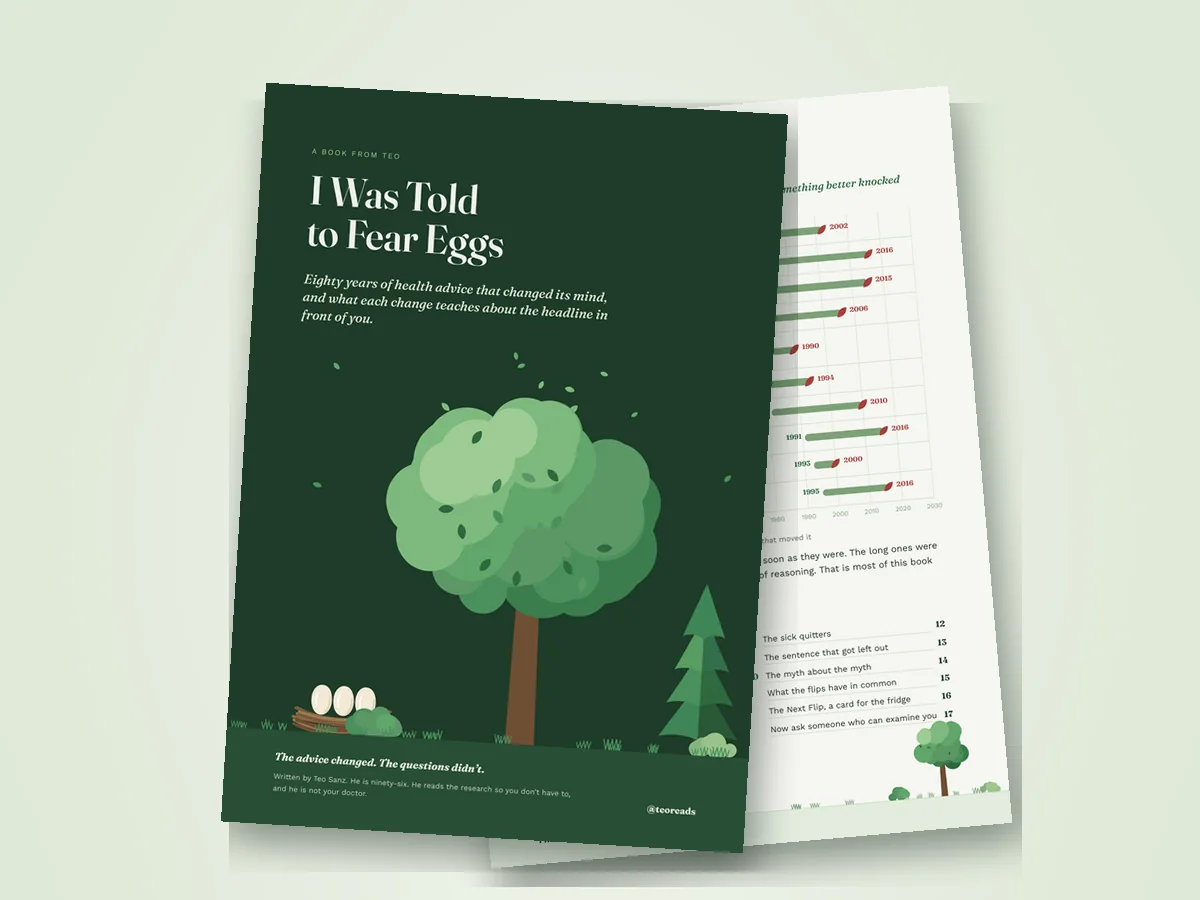
I Was Told to Fear Eggs
Ten pieces of health advice that changed their minds, what each one stood on, and how to read the next flip. No diet tips. Every source is real.
Download
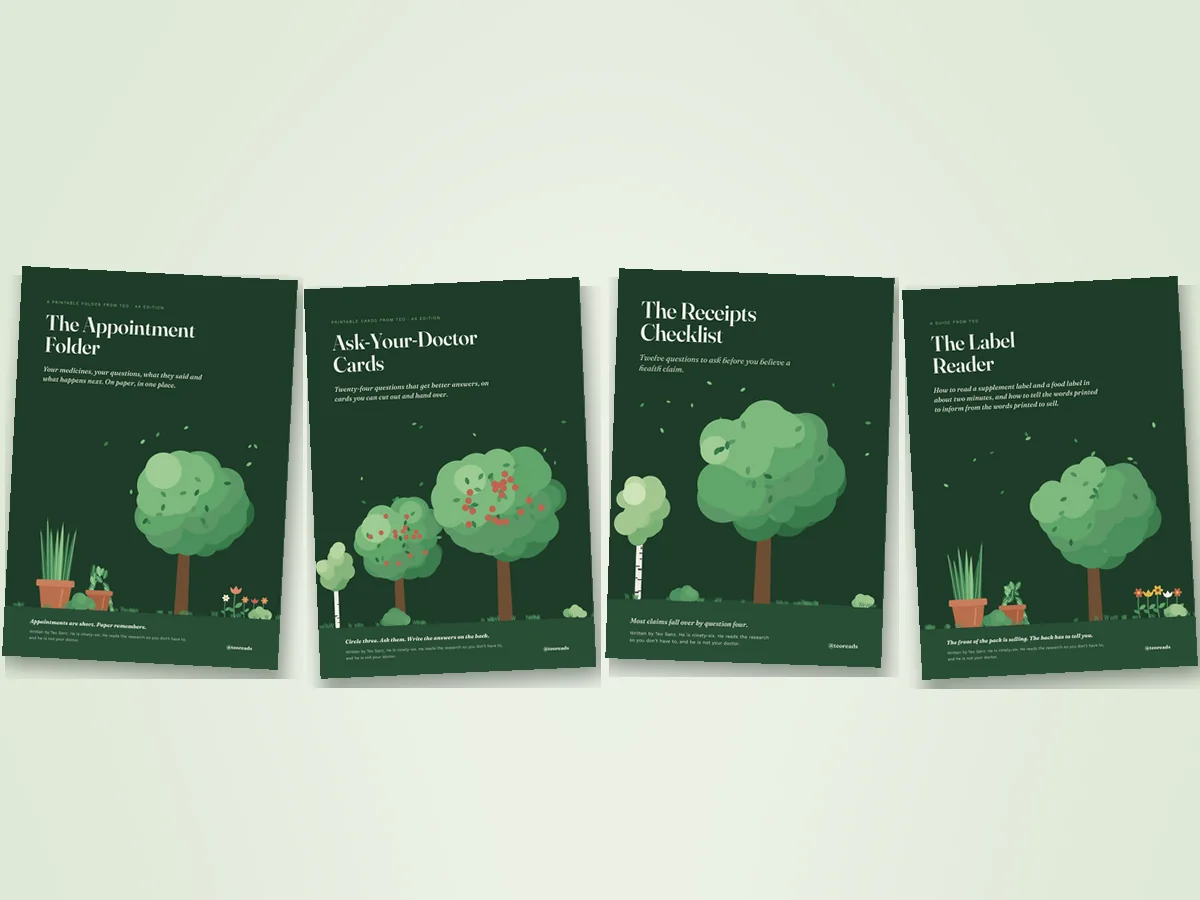
The Parents Pack
For the family member who goes to the appointments: the folder, the question cards, the label reader and the receipts checklist, in one pack.
Download
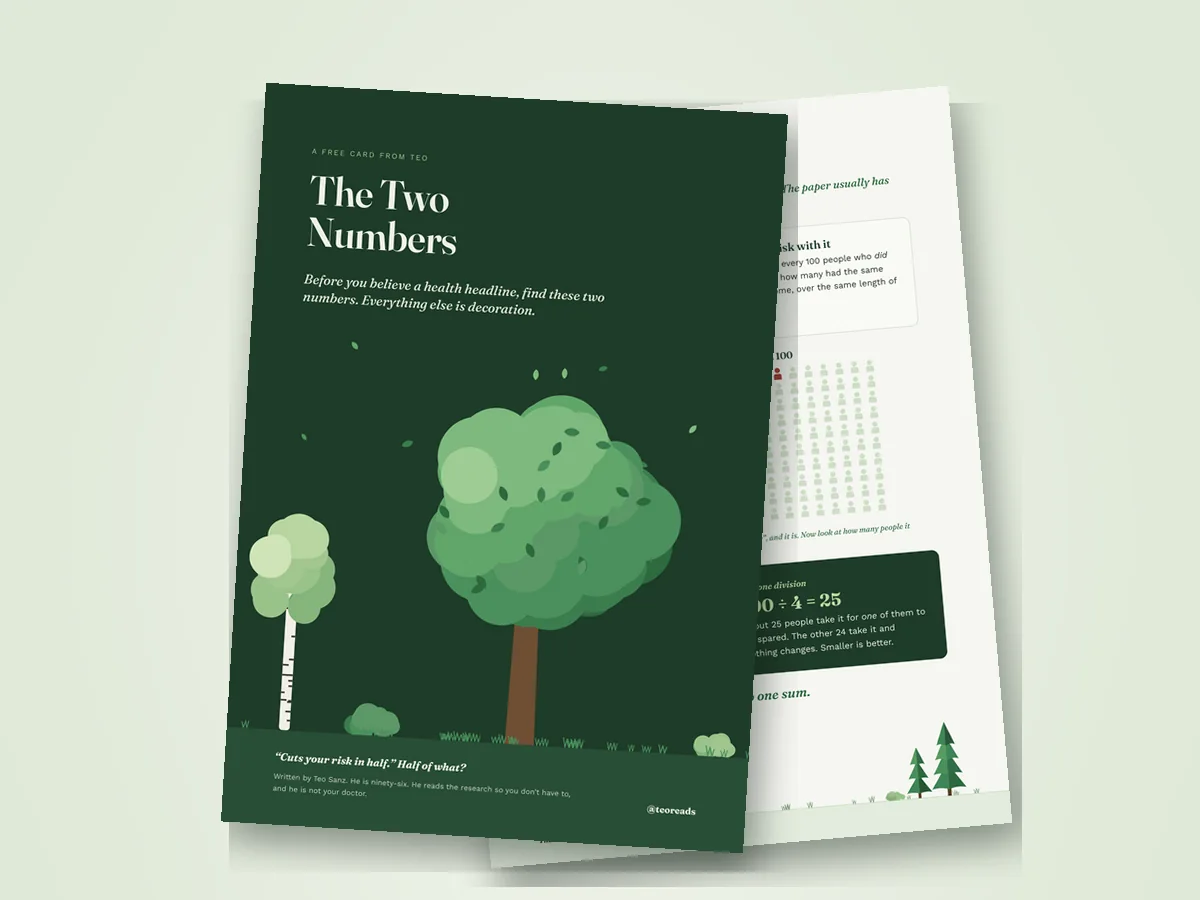
The Two Numbers
A free card for the fridge. Before you believe a health headline, find these two numbers: the risk without it, and the risk with it.