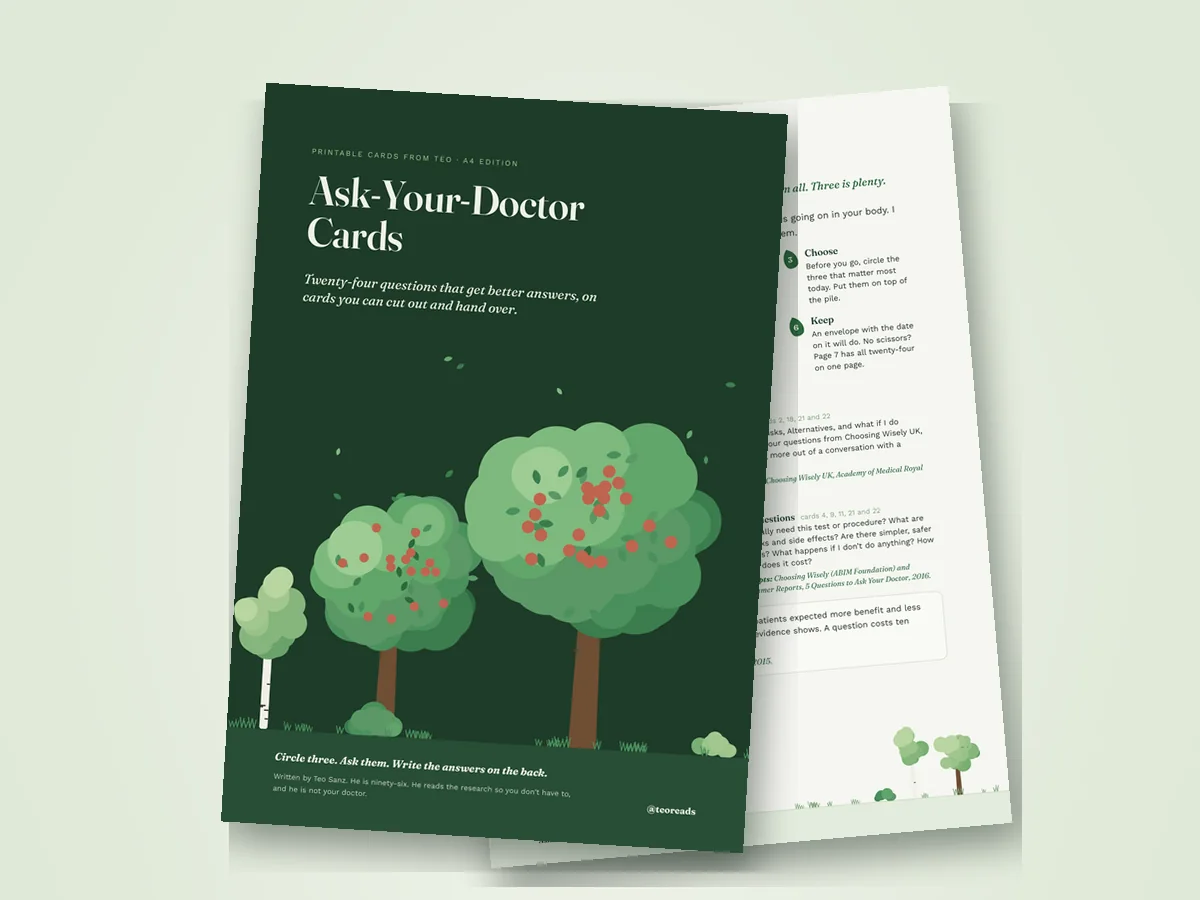
What's inside
- 24 question cards on print-ready sheets, eight to a page
- A4 and US Letter versions
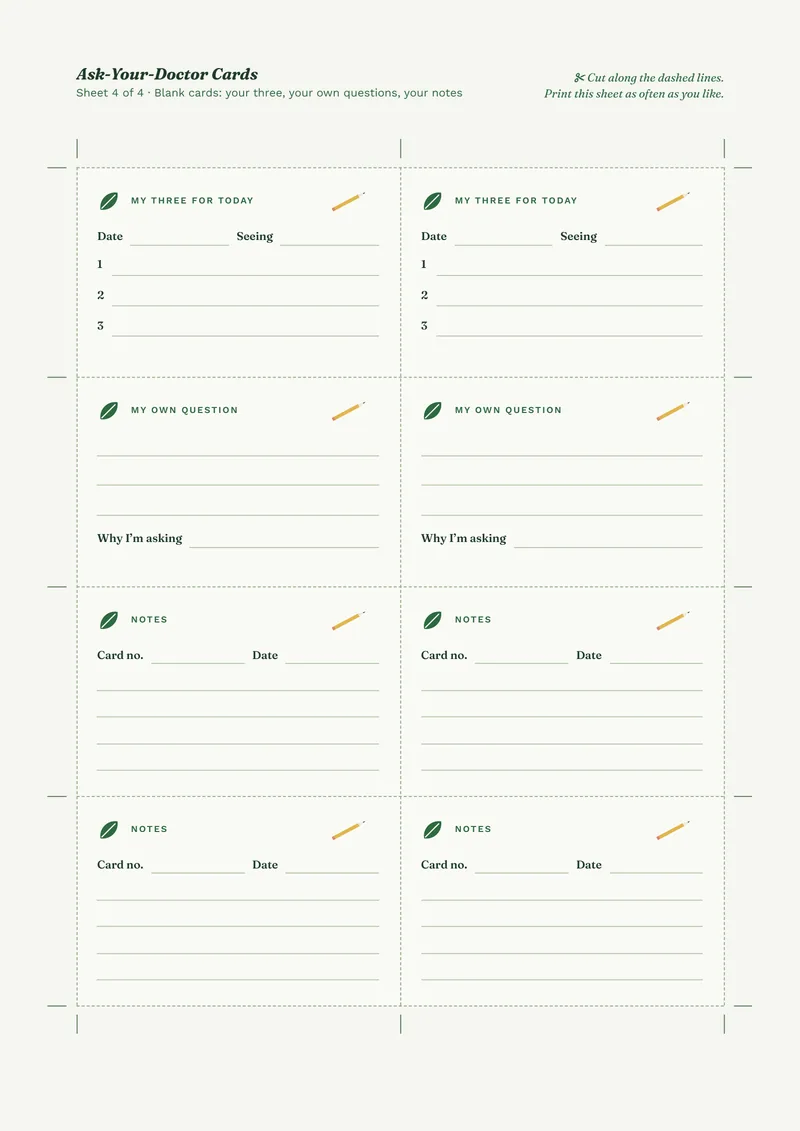
- Cutting guides, crop marks and a sheet of blank notes cards
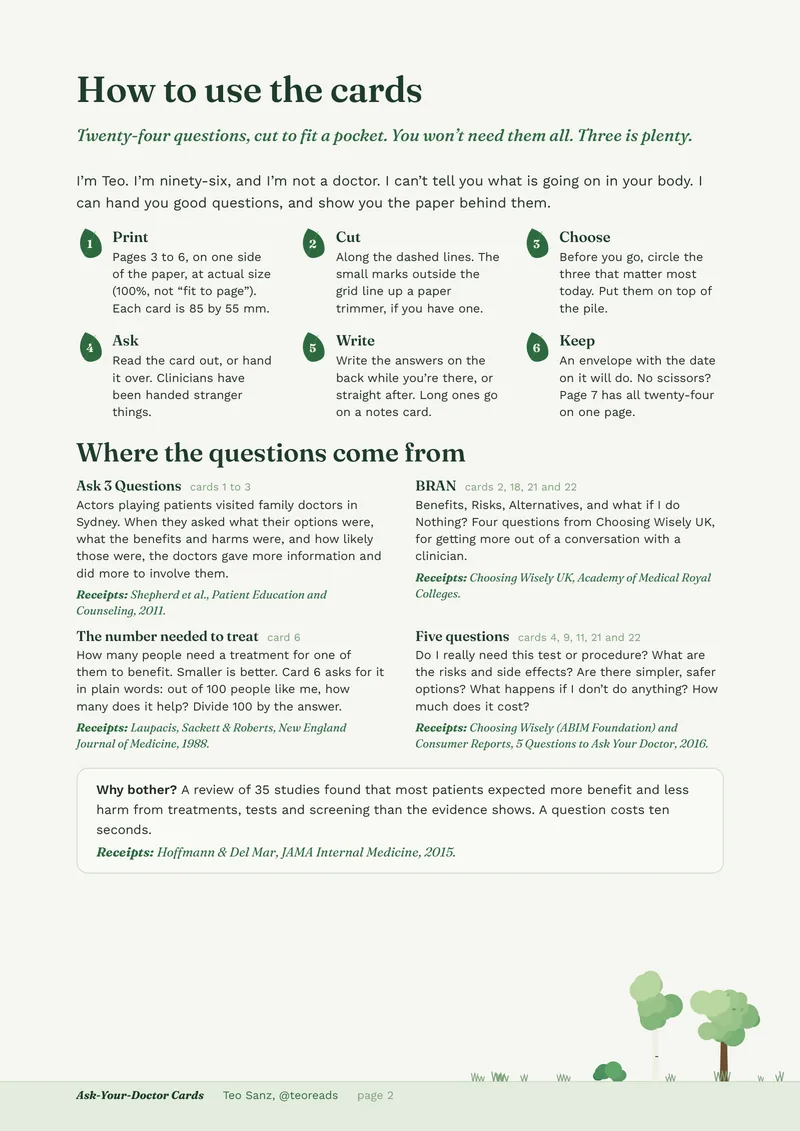
- A short note on how to use them, with every source named
- All 24 questions on one page, for when you'd rather not cut
Look inside
Real pages from the file. Tap one to see it larger.
About it
Appointments are short. The questions arrive after you leave.
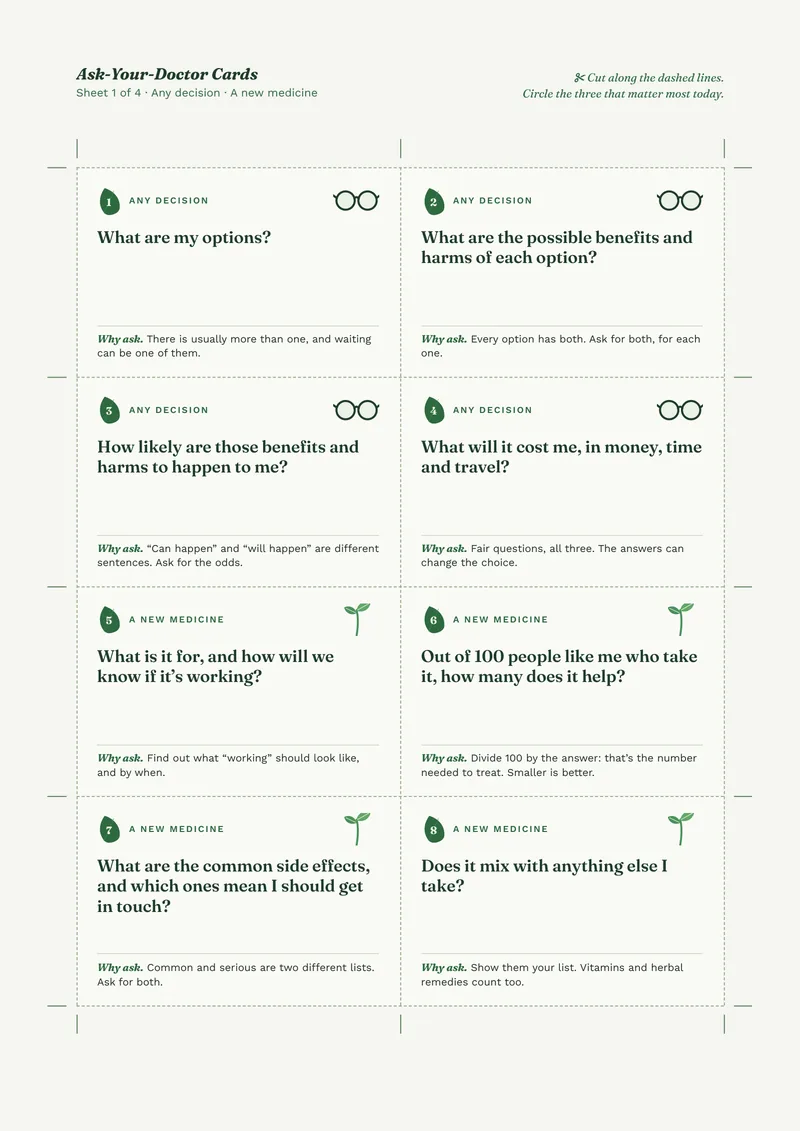
These cards hold them. Twenty-four questions, grouped by what's happening: any decision, a new medicine, a test or scan, a diagnosis, an operation or procedure, and waiting and the alternatives. Each card has the question in large type and one line from me on why it's worth asking.
They aren't my invention. Three come from Ask 3 Questions, a trial in Sydney where actors playing patients asked family doctors about their options, the benefits and harms, and how likely those were, and got more information back. Others follow BRAN from Choosing Wisely UK: Benefits, Risks, Alternatives, and what if I do Nothing. One asks for the number needed to treat in plain words: out of 100 people like me, how many does it help? The how-to page names every source.
Print the sheet, cut the cards, and circle the three that matter most today. Three questions fit in an appointment; ten don't. Write the answers on the back while you're there, or straight after. There's a sheet of blank cards for your own questions and notes, and a page with all 24 on one sheet if you'd rather not cut.
You get A4 and US Letter editions, with cutting guides and crop marks. Each card is 85 by 55 mm.
I'm not a doctor. These are questions, not advice. The answers come from someone who can examine you.
A page from it
1. What are my options? Why ask. There is usually more than one, and waiting can be one of them.
6. Out of 100 people like me who take it, how many does it help? Why ask. Divide 100 by the answer: that’s the number needed to treat. Smaller is better.
8. Does it mix with anything else I take? Why ask. Show them your list. Vitamins and herbal remedies count too.
Questions
How do I print them?
A4 or US Letter?
Can I fill them in on screen?
Will my doctor mind?
Do they help if I go with a parent?
Is this medical advice?
Where do the questions come from?
Free reading on this
- Number needed to treat, explained with one divisionNumber needed to treat tells you how many people take something for one of them to benefit. How to work it out from any study, and what it can't tell you.
- Questions to ask your doctor about a new medicine, test or treatmentAppointments are short and the questions arrive after you leave. Two well-tested question sets, and how to get the numbers you need.
Also in the shop
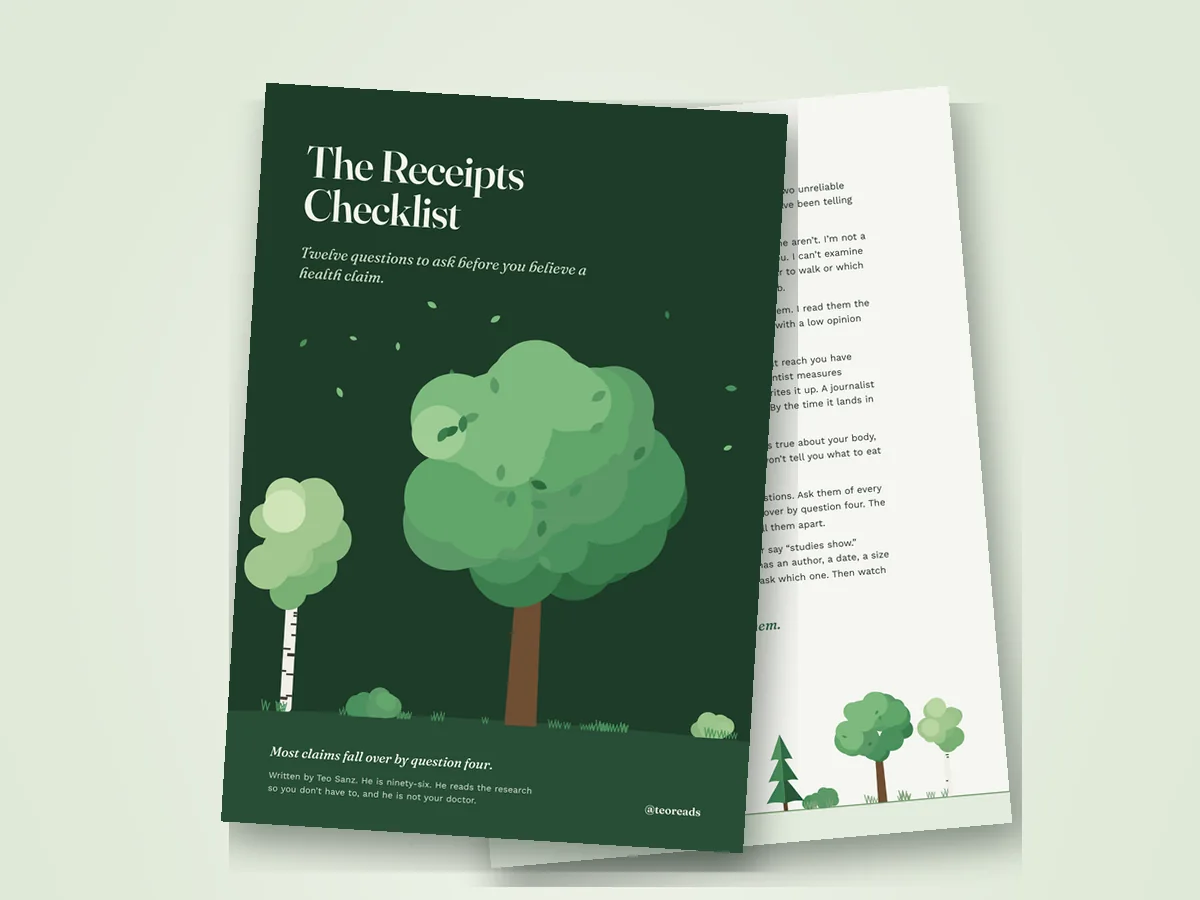
Download
The Receipts Checklist
Twelve questions to ask before you believe a health claim, each with a real case, the paper to look up and the red flag that gives it away.
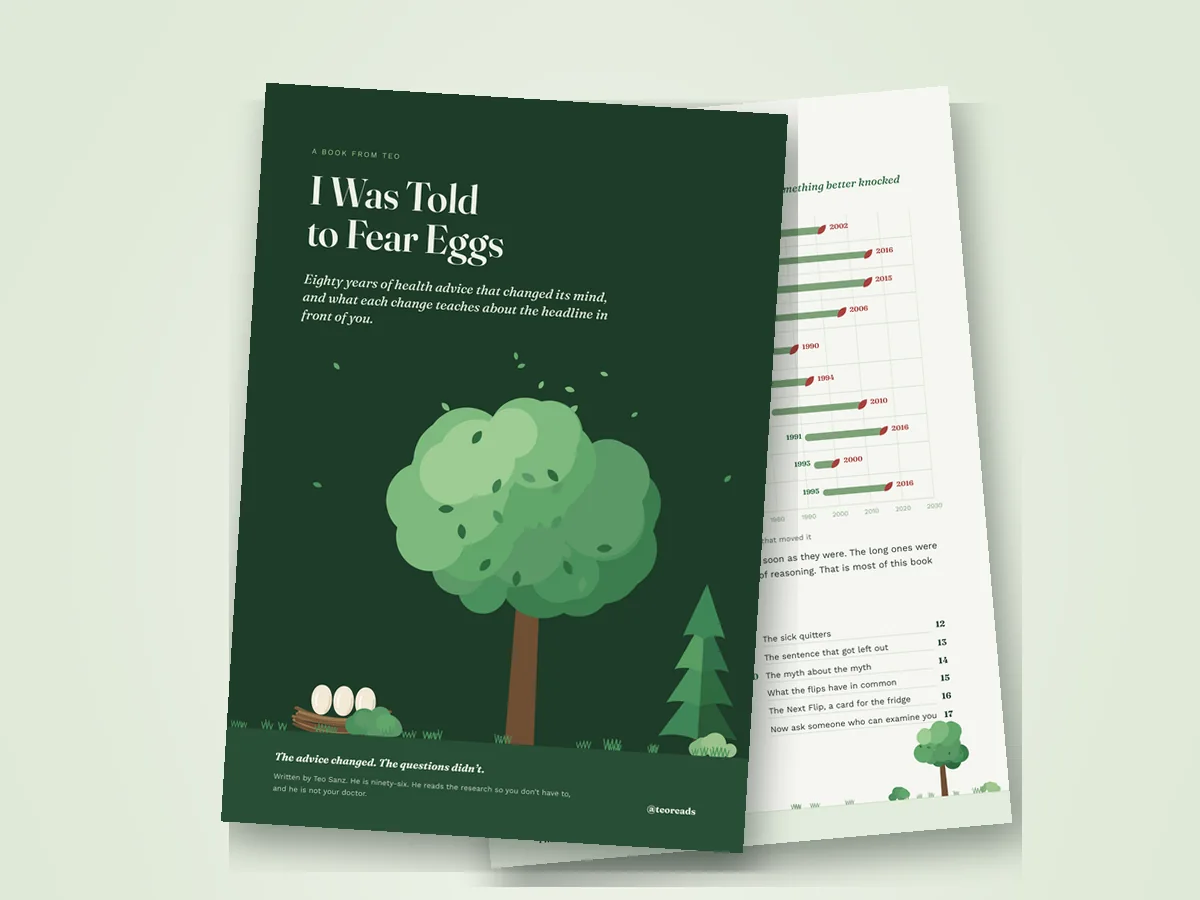
Download
I Was Told to Fear Eggs
Ten pieces of health advice that changed their minds, what each one stood on, and how to read the next flip. No diet tips. Every source is real.

Download
The Parents Pack
For the family member who goes to the appointments: the folder, the question cards, the label reader and the receipts checklist, in one pack.