A note from Teo
Questions to ask your doctor about a new medicine, test or treatment
Appointments are short and the questions arrive after you leave. Two well-tested question sets, and how to get the numbers you need.
Appointments are short. The good questions arrive in the car park. I can't examine anyone, I'm not a doctor, but I can hand you the questions that researchers and doctors themselves recommend, so you arrive with them instead of leaving without them.
The three questions that made a measurable difference
In a small trial in family practices in Sydney, researchers sent trained actors posing as patients to see doctors. Some asked three questions:
- What are my options?
- What are the benefits and harms?
- How likely are these?
When the three questions were asked, doctors gave more information about the options and their benefits and risks. Three questions. That's a very good return.
BRAN: four more words to remember
Choosing Wisely UK, a campaign run with the UK's medical royal colleges, suggests four questions before any test or treatment:
- Benefits: what are the benefits?
- Risks: what are the risks?
- Alternatives: what are the alternatives?
- Nothing: what happens if I do nothing?
The last one is the one people forget. "What if we wait?" is a respectable medical question. Sometimes the answer is "you'd get worse". Sometimes it's "you'd probably be fine". Either answer is worth having.
Ask for numbers, not adjectives
"Very effective" and "rarely" are adjectives. Numbers are better, and good clinicians usually have them:
- Out of 100 people like me, how many does this help, and over what time?
- Out of 100 people like me, how many get the common side effects? And the rare serious ones?
- How sure are we? Is this from big trials or a few small studies?
That first question is the number needed to treat in plain clothes.
For a new medicine
- What is it for, and how will we know if it's working?
- What are the common side effects, and which ones should make me call you?
- Does it interact with anything else I take? (Bring the list.)
- How long will I take it, and how would we stop?
For a test or scan
- What will the result change? If it's normal, what then? If it isn't?
- How accurate is it? How often does it raise a false alarm?
- Is there anything I should do before it?
Making it work on the day
- Write the questions down before you go, and circle the three that matter most today. Three fit in an appointment. Ten don't.
- Bring your medicine list, including anything bought without a prescription.
- Bring someone if you can. Two people remember more than one.
- Write the answers down during the appointment or straight after. Memory rewrites things by dinner time.
Tools for this
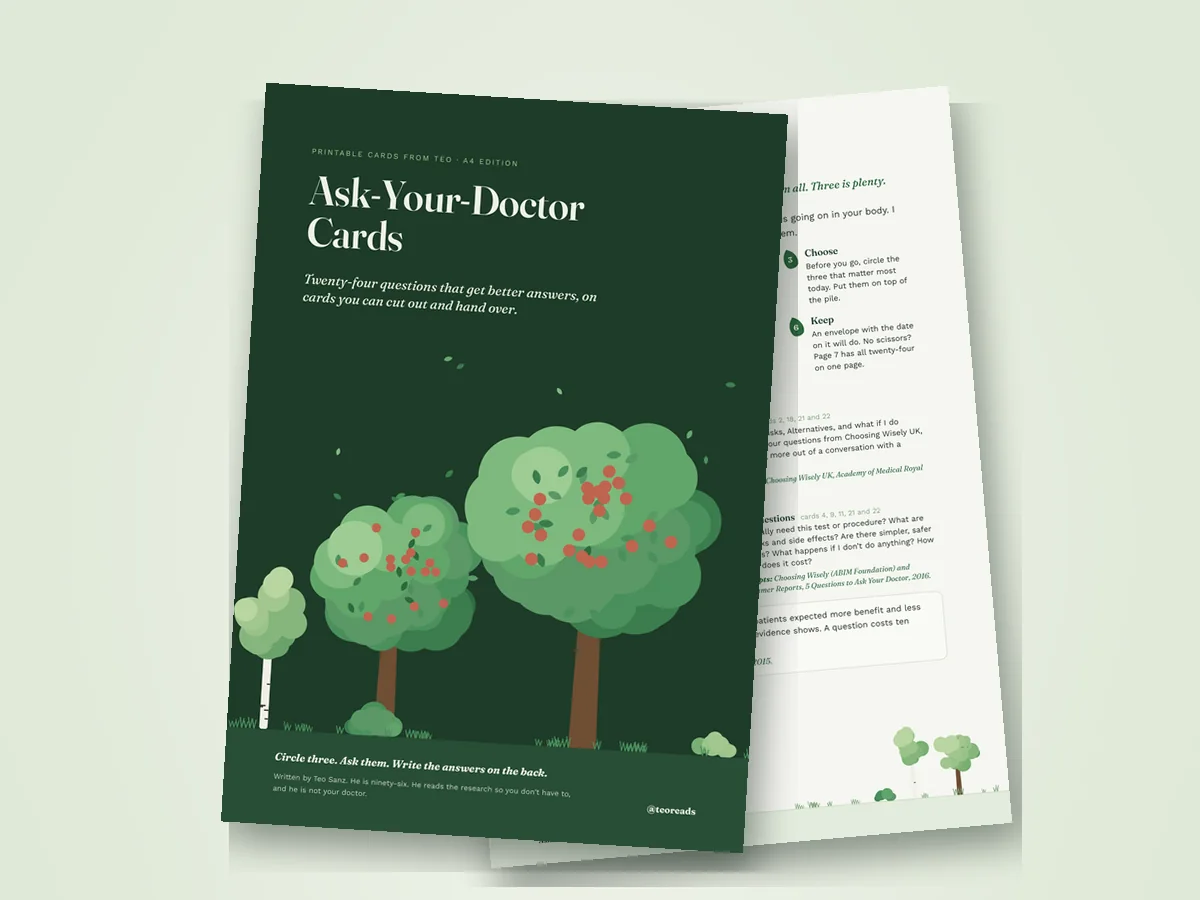
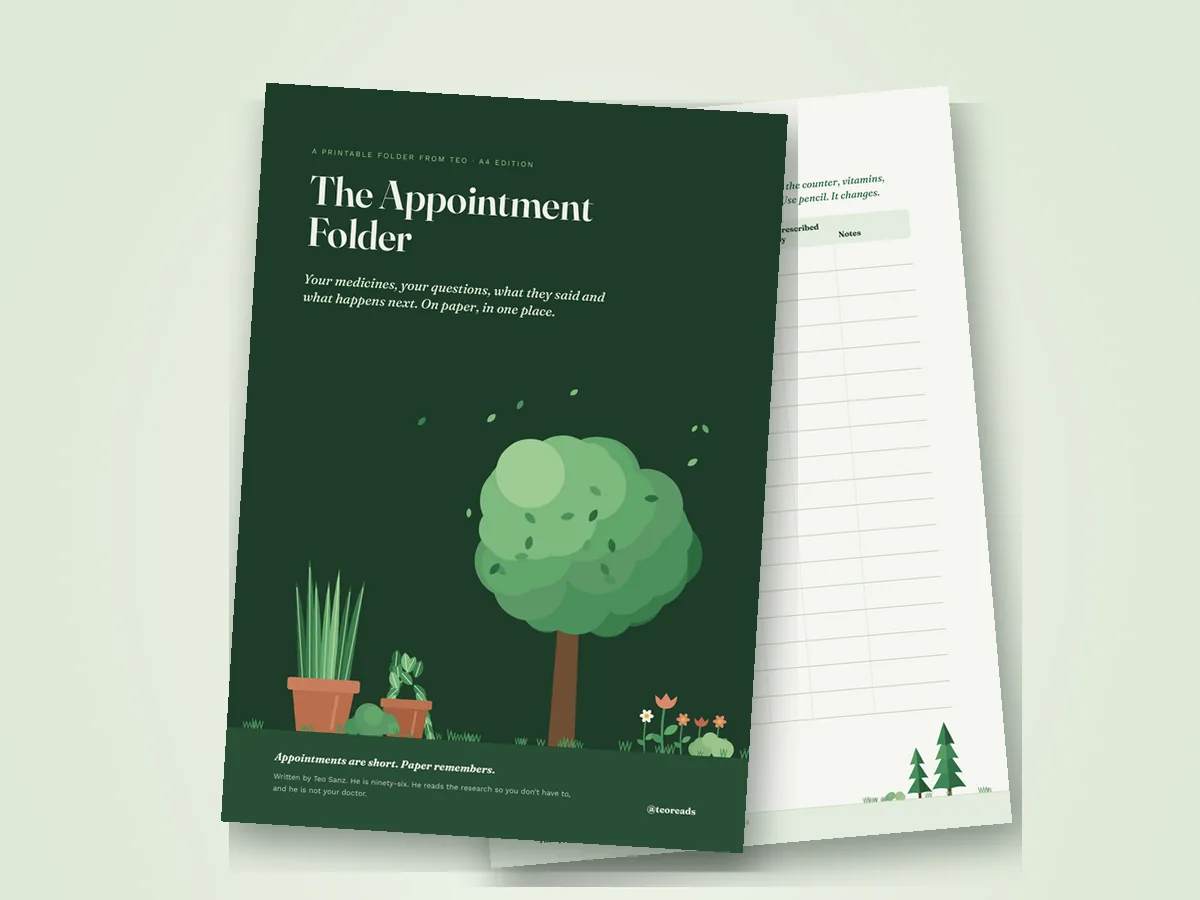
My Ask-Your-Doctor Cards put these questions on printable cards: cut them, circle three, hand them over. The Appointment Folder keeps your medicines, your questions and what was said in one place, which helps a great deal when you're looking after a parent too.
The receipts
- Shepherd et al., Patient Education and Counseling, 2011: the three questions trial.
- Academy of Medical Royal Colleges, Choosing Wisely UK: the BRAN questions.
This is education about reading research, not medical advice. Take your questions to someone who can examine you.