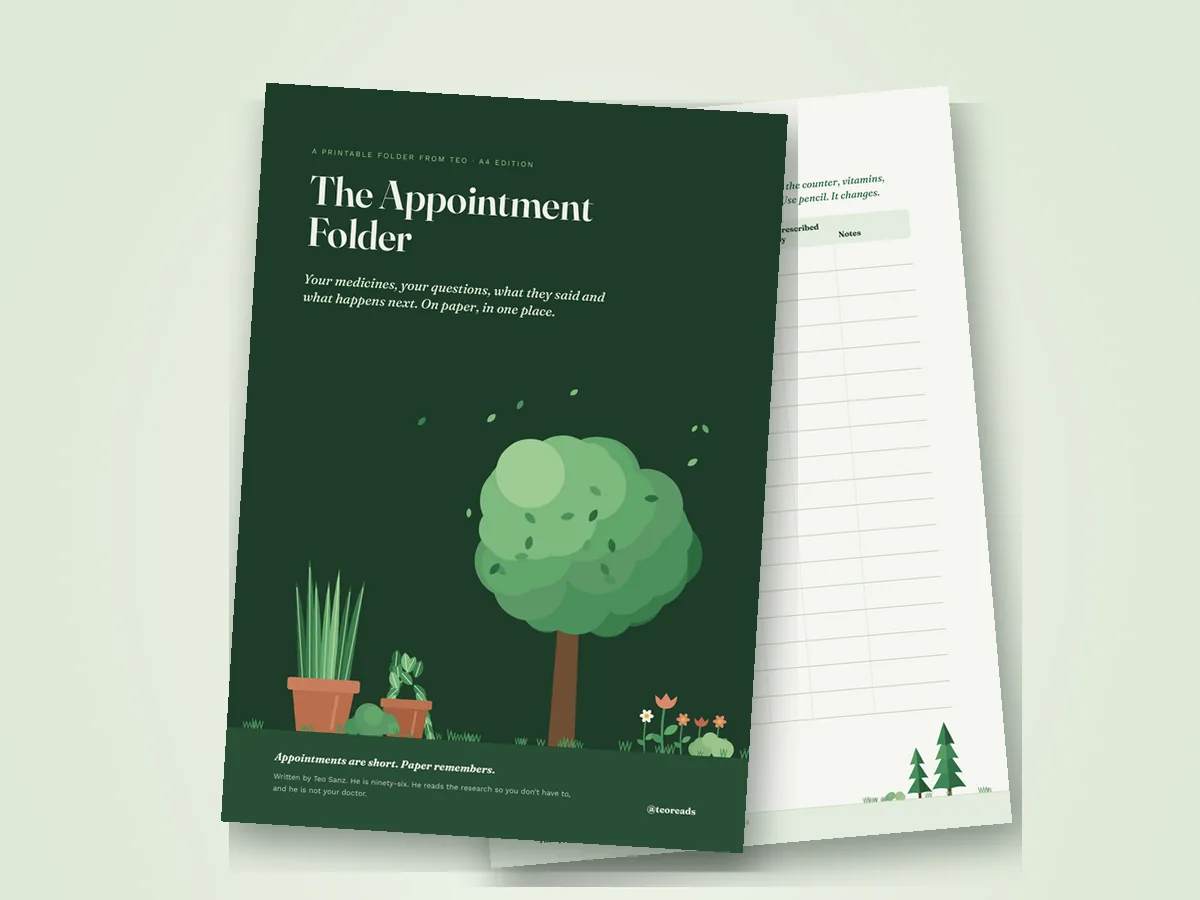
What's inside
- A 16-page printable PDF, in A4 and US Letter editions
- About me, your care team and emergency contacts, with a health service or insurance number field
- Two medicine pages, allergies and reactions, and a family health history
- A before-the-visit page, a one-week symptom diary and a blank chart for a reading to track
- Three appointment notes pages, a test results tracker and an after-the-visit checklist
- A page of questions to ask about a new medicine or test
Look inside
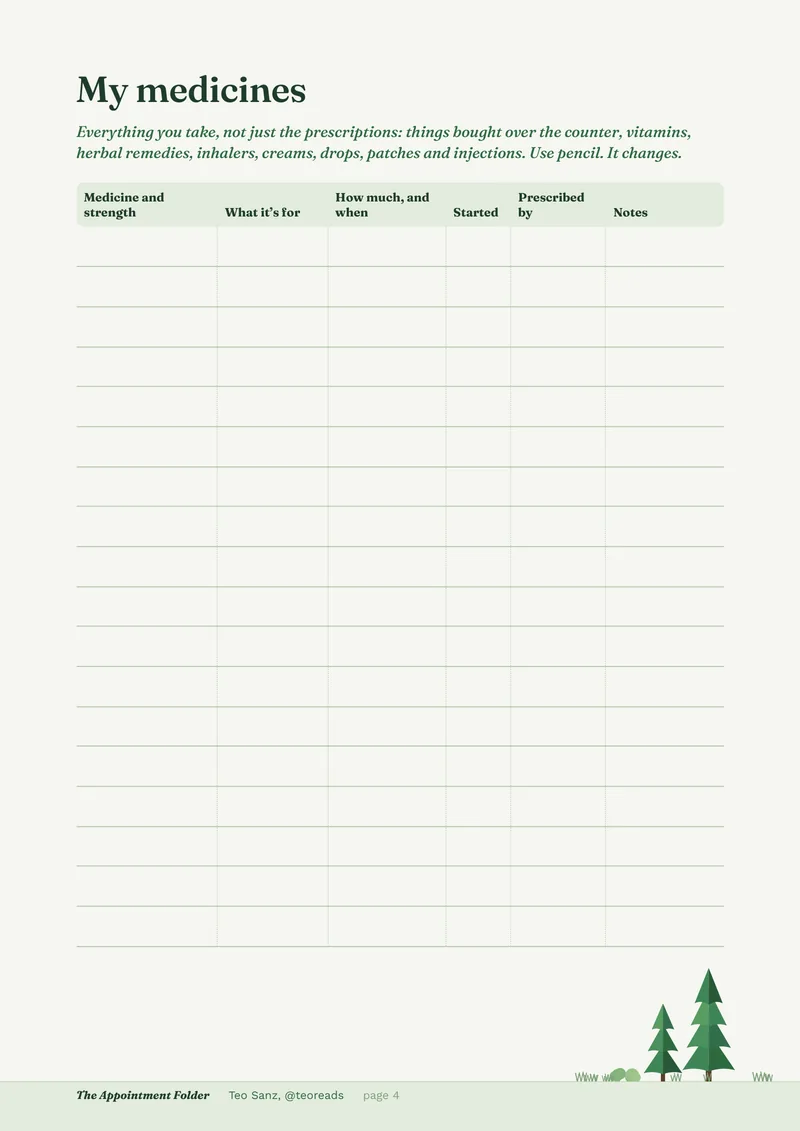
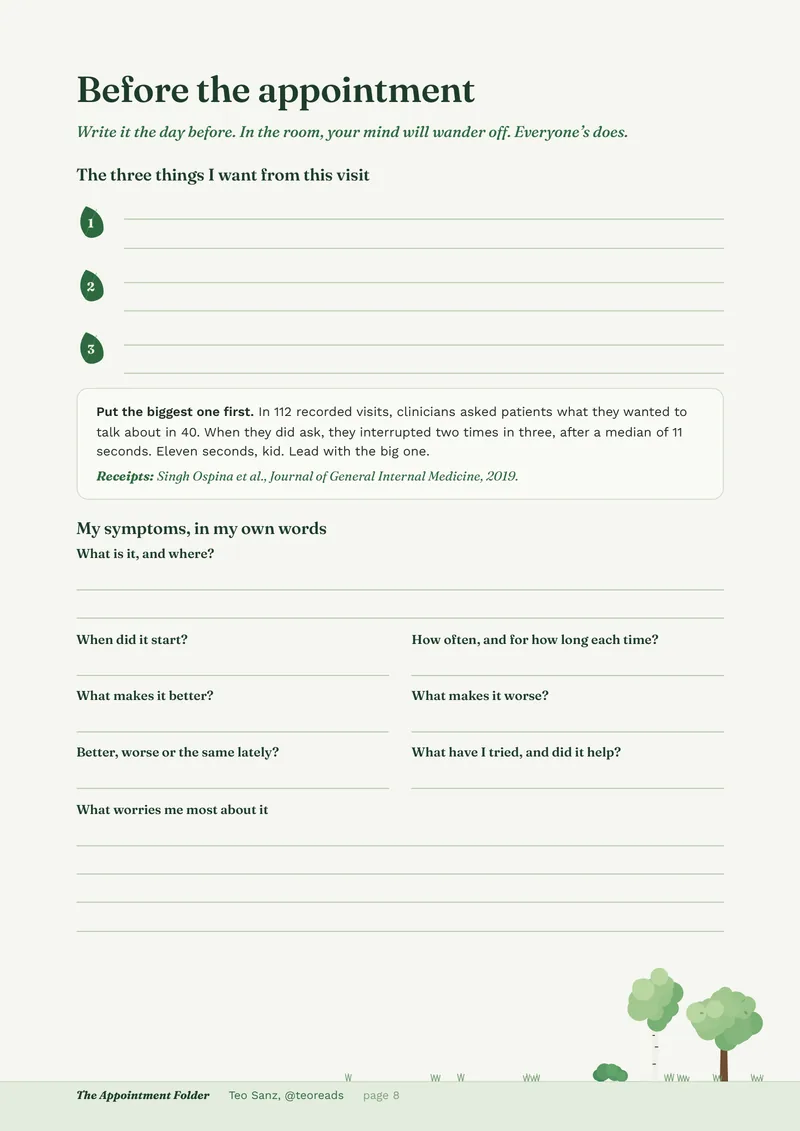
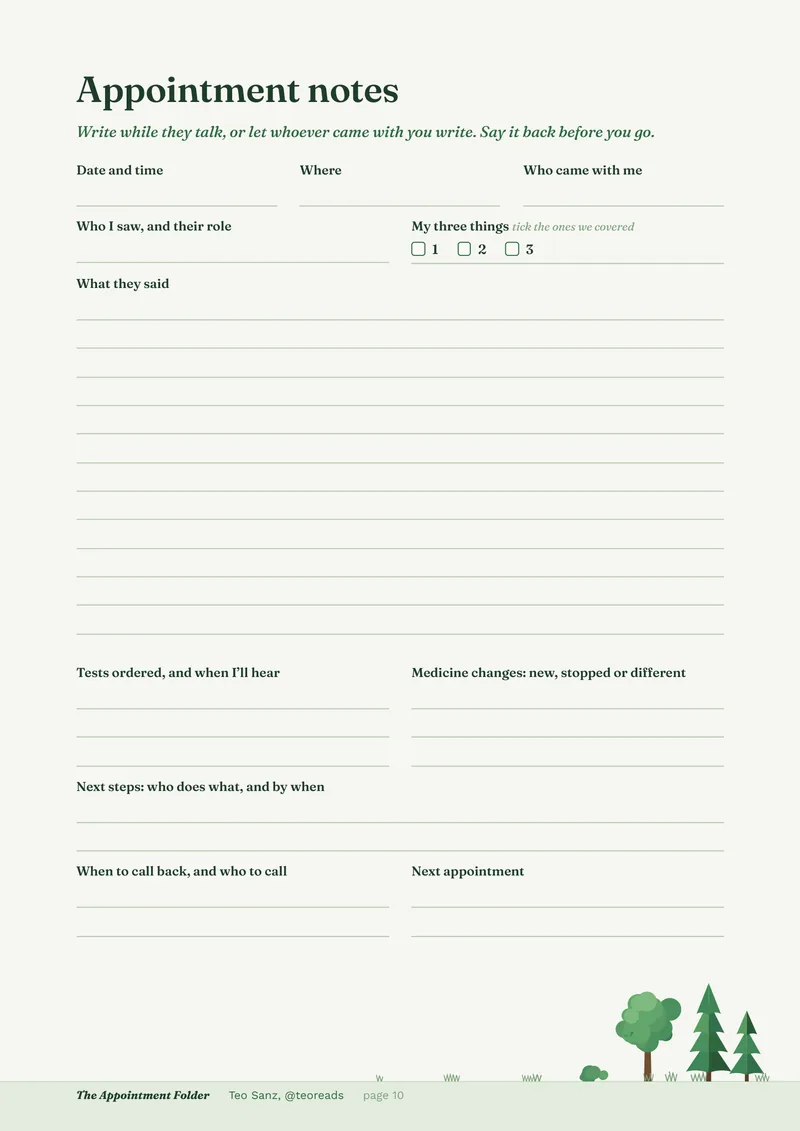
Real pages from the file. Tap one to see it larger.
About it
Appointments are short. Paper remembers.
A 2017 review of 67 countries found that in countries holding about half the world's people, the average visit to a family doctor lasts five minutes or less. Another review says people forget between 40 and 80 percent of what a clinician tells them almost straight away. So I made a folder. It won't diagnose anything. Neither will I. It holds what a short appointment needs, on paper, in one place.
It starts with the pages a new clinician asks for first: about me, your care team, emergency contacts and a field for your health service or insurance number. Then your medicines over two pages, with room for the ones you've stopped. Allergies and reactions, in plain words. Family health history, filled in at the kitchen table instead of a waiting room.
Before the appointment, you write the three things you want from it, and your symptoms in your own words. There's a one-week symptom diary, and a blank chart for any reading a clinician has asked you to keep. During it, three appointment notes pages: what they said, tests ordered, medicine changes, next steps and when to call back. After it, a test results tracker, a checklist, and a page of questions to ask about a new medicine or test.
If you help a parent with appointments, it's for you too. Fill it in together, in their words.
You get A4 and US Letter editions. Print it, clip a pen to it, and take it every time.
I'm not a doctor. This folder organises your information and your questions. The answers come from someone who can examine you.
A page from it
My name is Teo. I’m ninety-six, I’m not a doctor, and I can’t come to your appointment. This folder can. It holds what a short appointment needs: your medicines, your questions, what was said and what happens next. All it asks for is a pen and ten minutes the day before.
Why paper. Because memory is a poor filing system. A review of the research says that between 40 and 80 percent of what a clinician tells people is forgotten almost straight away, and that almost half of what people do remember is wrong. The same review says written information is remembered better. So write it down, or bring someone who will.
Questions
Can I fill it in on screen?
Which paper size should I use?
Is it for someone helping a parent?
Can I print it more than once?
Is this medical advice?
How is it delivered?
Free reading on this
Also in the shop
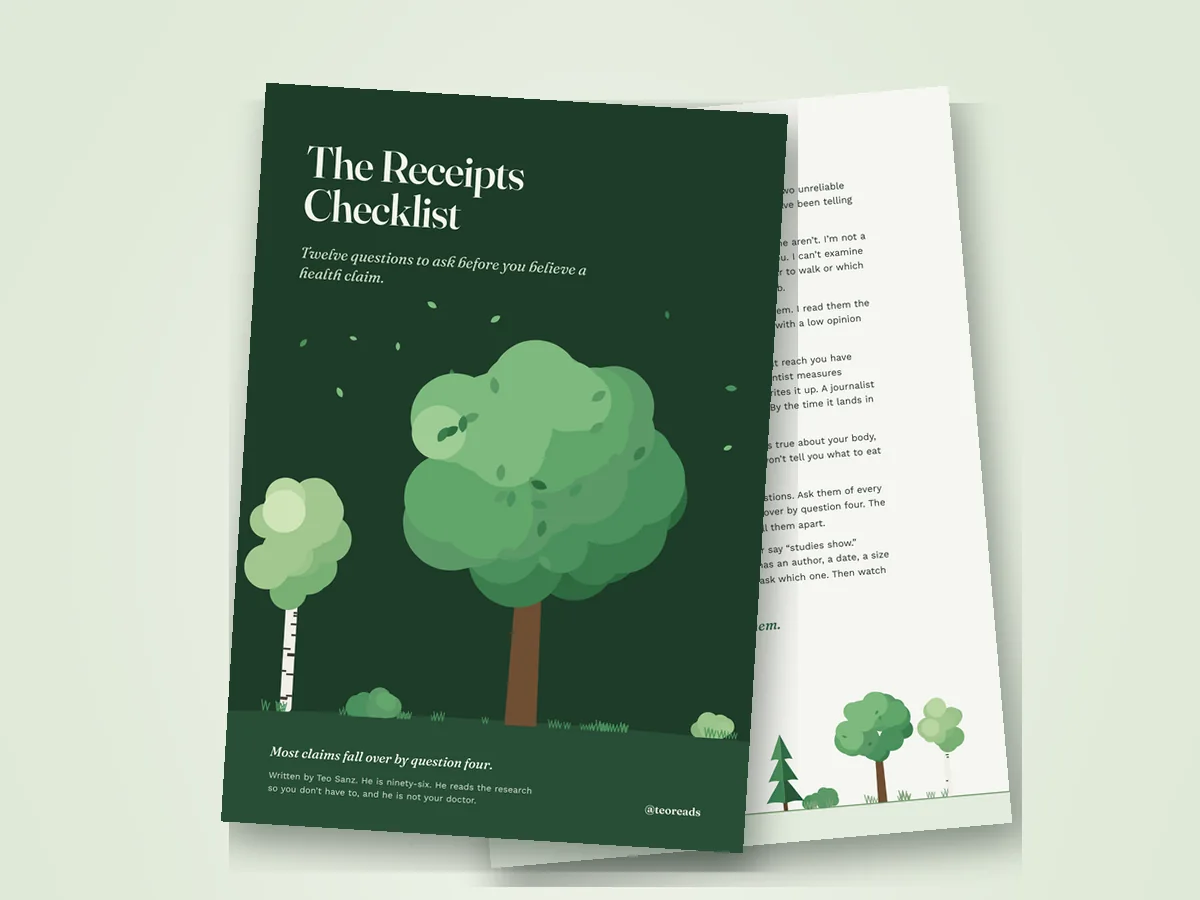
Download
The Receipts Checklist
Twelve questions to ask before you believe a health claim, each with a real case, the paper to look up and the red flag that gives it away.
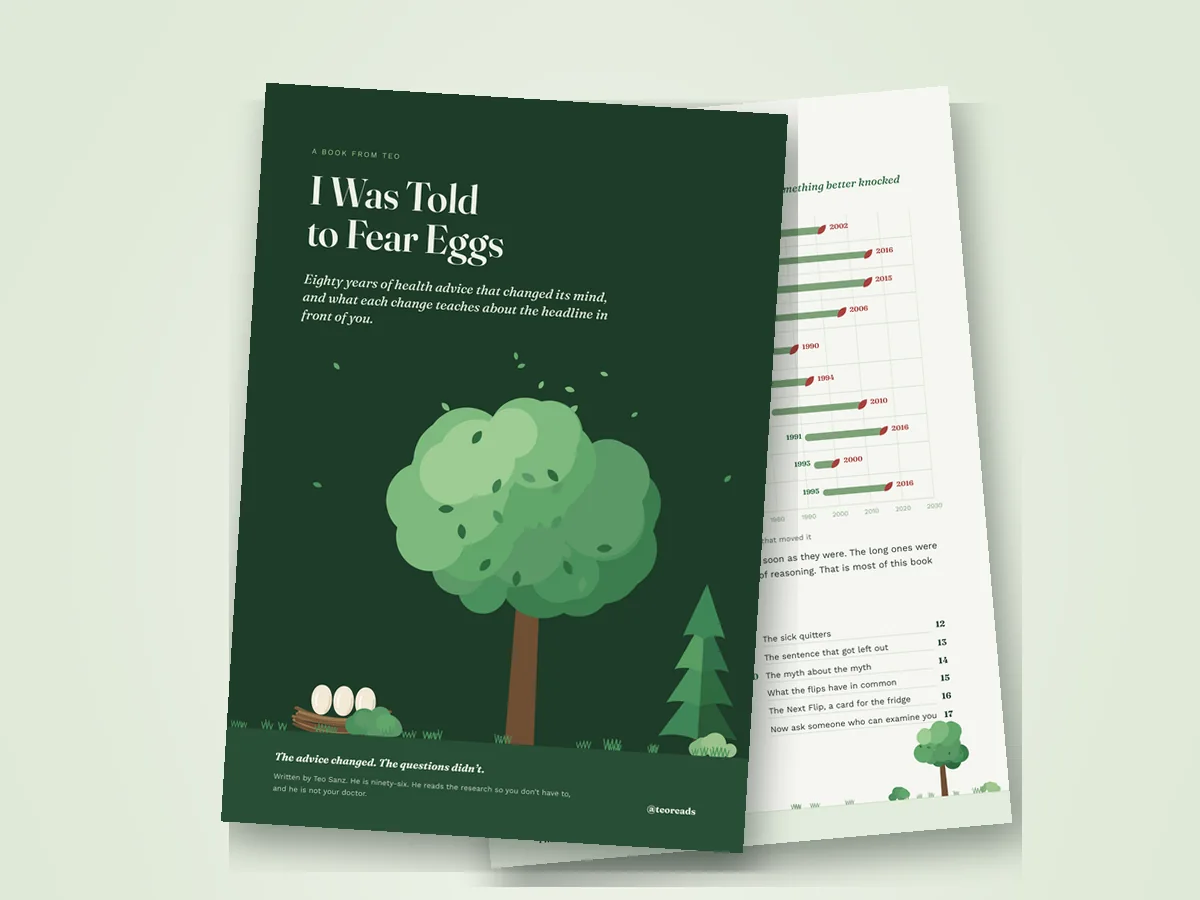
Download
I Was Told to Fear Eggs
Ten pieces of health advice that changed their minds, what each one stood on, and how to read the next flip. No diet tips. Every source is real.
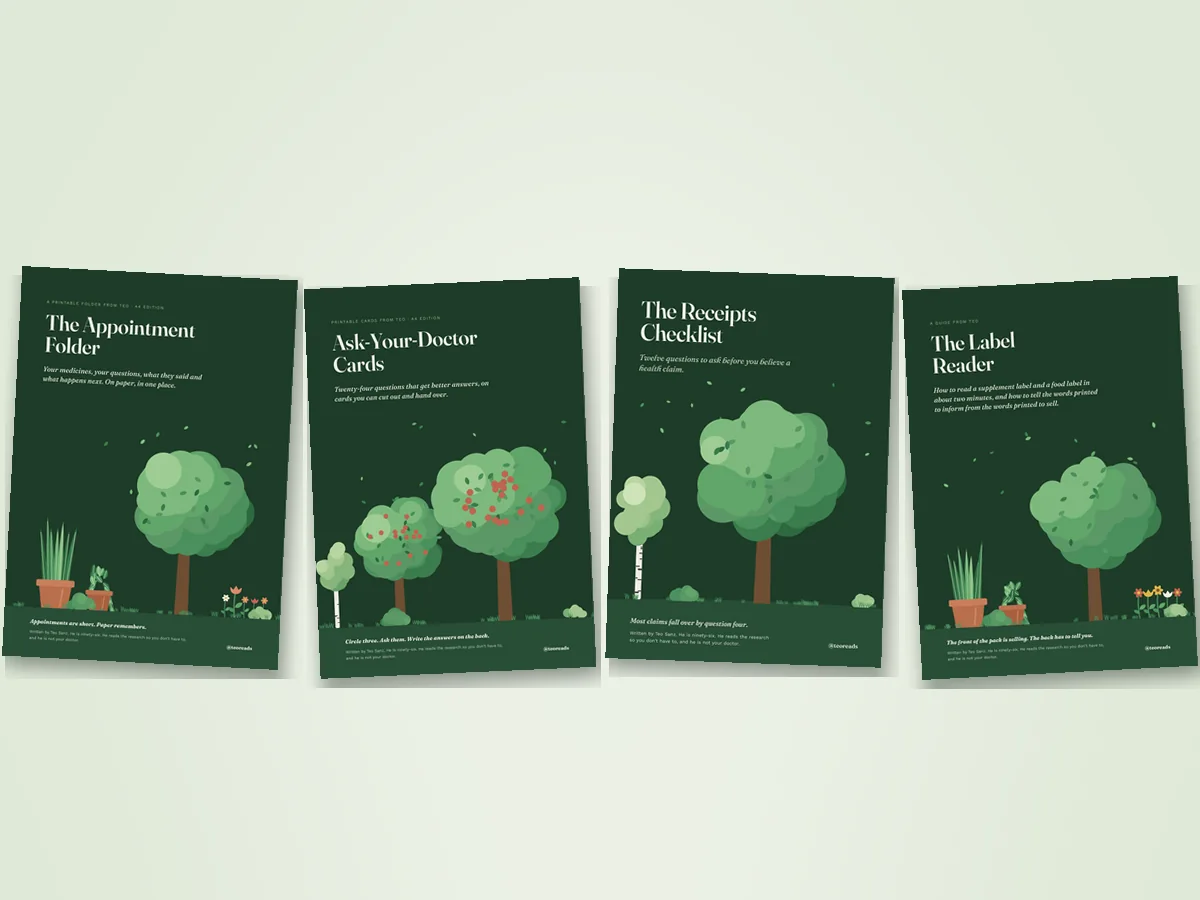
Download
The Parents Pack
For the family member who goes to the appointments: the folder, the question cards, the label reader and the receipts checklist, in one pack.