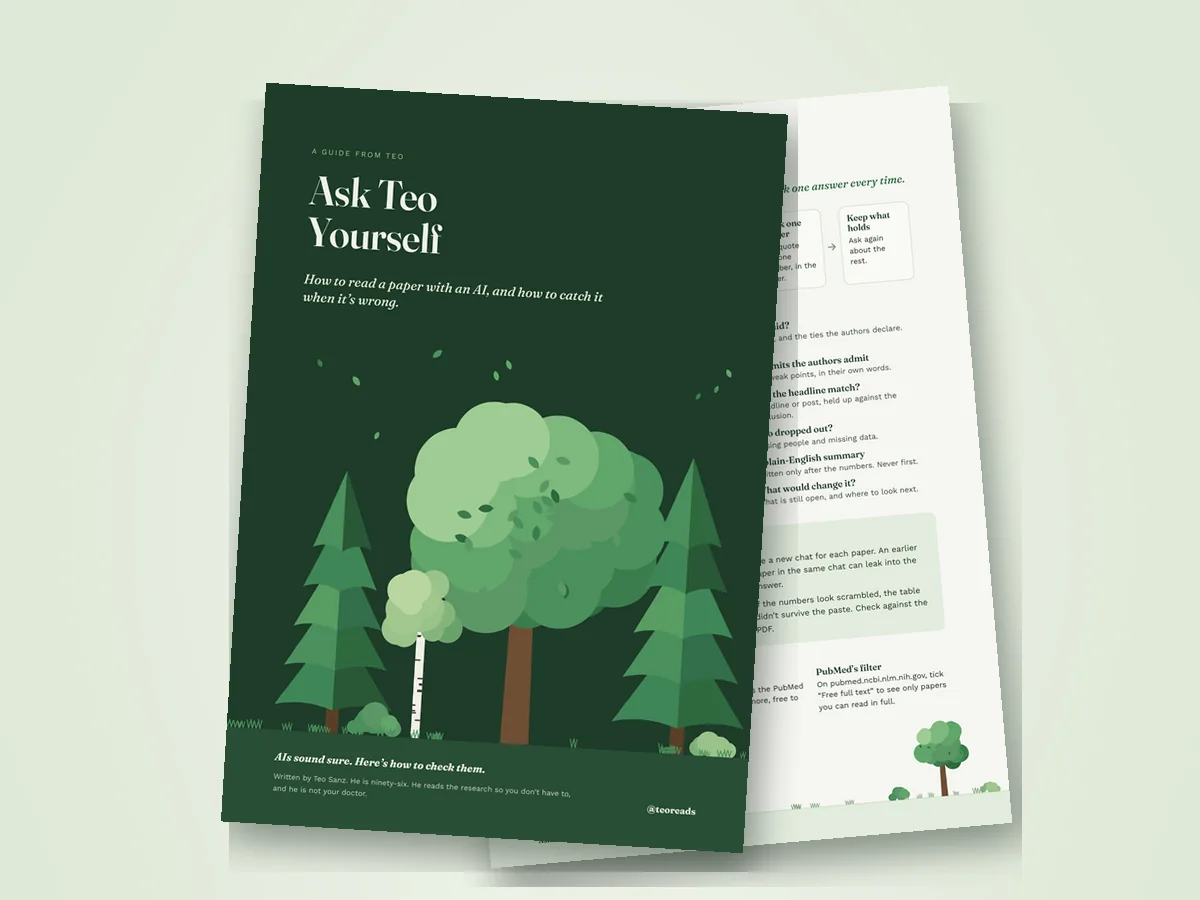
What's inside
- 12 prompt files (.md) in a ZIP, one question each
- A 10-page PDF guide to checking an AI's answer against the paper
- One worked example on an open-access paper, mistake included
- A short list of what the prompts can't do
- A README with the order to use them and a privacy note
Look inside
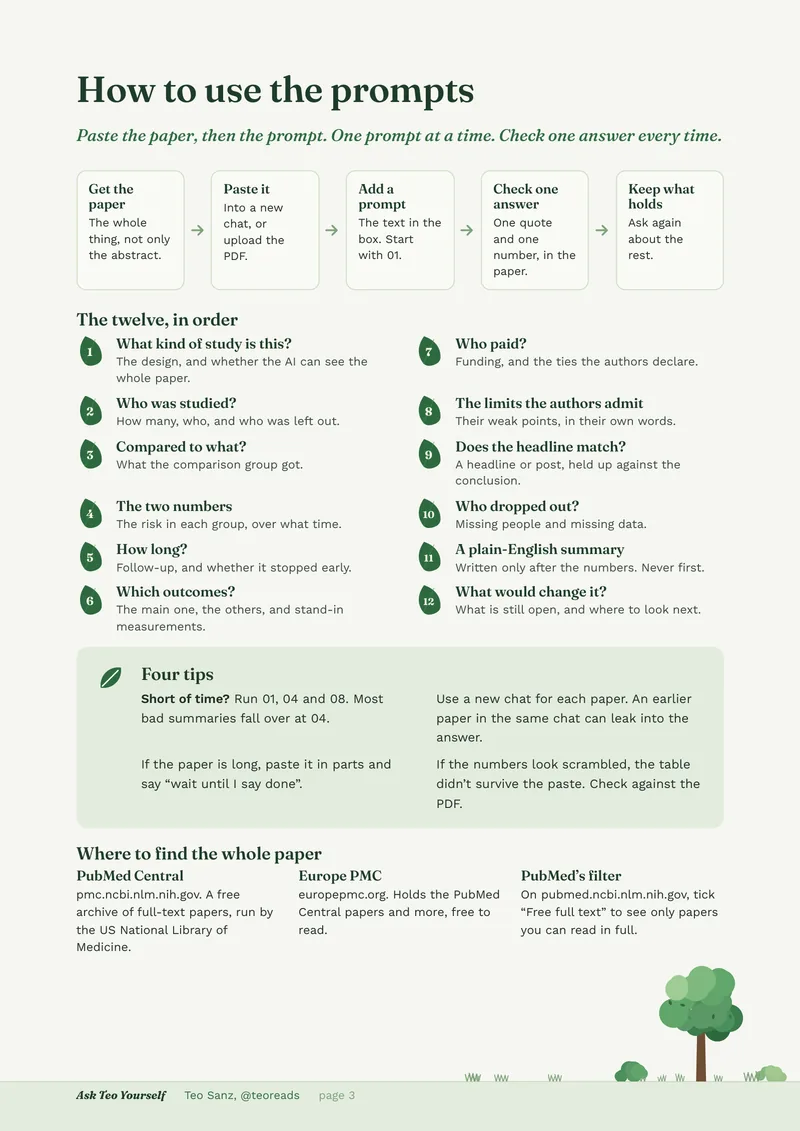
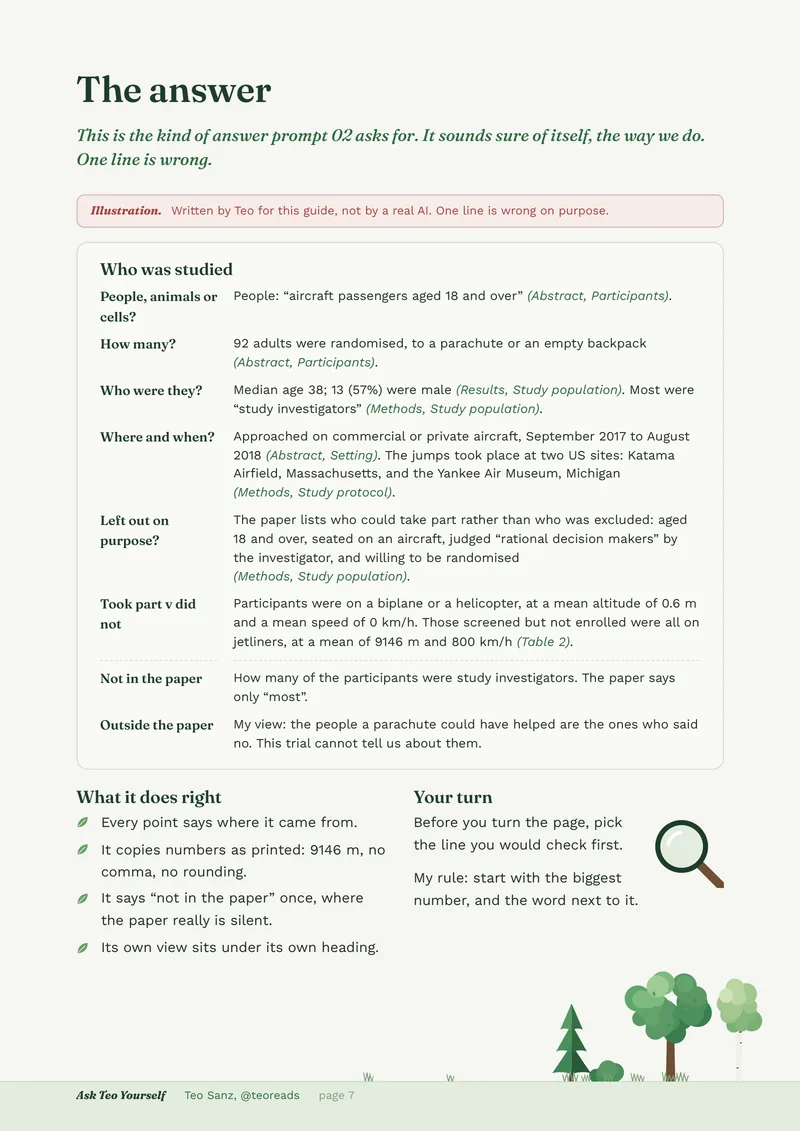
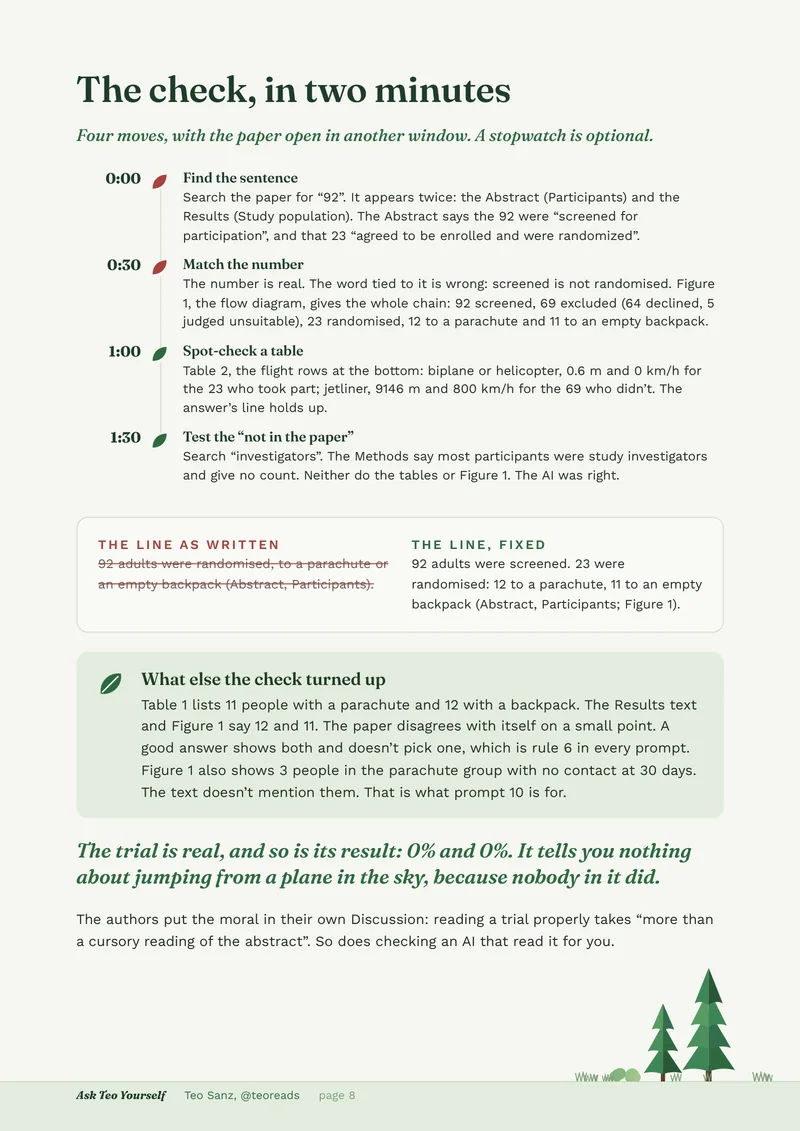
Real pages from the file. Tap one to see it larger.
About it
My grandson showed me how to paste a research paper into one of these AI chat assistants, and I have been checking their homework ever since. Here is what they get wrong. They summarise the abstract and call it the paper. They round numbers. They answer confidently about tables they never read. When there's a gap, they fill it with something that sounds right.
These twelve prompts make an AI slow down. Each one asks for one thing: what kind of study it was, who was in it, what they were compared with, the two numbers behind a risk, who paid, the limits the authors admit. Each one makes the AI quote the paper and say where the quote is. Each one makes it say "not in the paper" instead of guessing, keep its own opinion apart, and stay out of medical advice.
A prompt makes a good answer more likely. Only checking makes it safe to use. So half of this pack is a 10-page guide to checking an AI's answer against the paper in about two minutes: find the sentence, match the number, test the "not in the paper", spot-check a table, and watch for rounding and relative-only numbers.
The guide works through one real, open-access paper from start to finish: a randomised trial of parachutes from the BMJ's Christmas issue. Its abstract says parachutes made no difference. Two sentences later it tells you why. You'll see the prompt, an answer with a mistake in it, and the check that catches the mistake. Then a short list of what the prompts can't do.
Works with the common chat assistants. Paste the paper, then the prompt. Never paste your own health records; the README explains why.
It won't tell you what a paper means for your body. Nothing that has never met you can.
A page from it
Here is what we get wrong. We summarise the abstract and call it the paper. We round numbers. We answer confidently about tables we never read. When there’s a gap, we fill it with something that sounds right, because sounding right is the thing we are best at.
None of that is lying. It’s worse. It’s fluent.
This guide is the other half. A good prompt makes a good answer more likely. Only checking makes it safe to use.
Questions
Which AI does it work with?
Is my data safe?
Is this medical advice?
Do I need a science background?
What kind of papers does it work on?
What if the AI still gets something wrong?
Can I change the prompts?
Free reading on this
- How to read a health research paper: start at the backSkip the abstract. Read the methods, then the results table, then the conclusion. A reading order for health papers that anyone can learn in an afternoon.
- How to use ChatGPT or Claude to read a medical study, and catch it when it’s wrongAI assistants summarise the abstract and call it the paper. How to make one quote the paper, and a two-minute check that catches its mistakes.
Also in the shop
Download
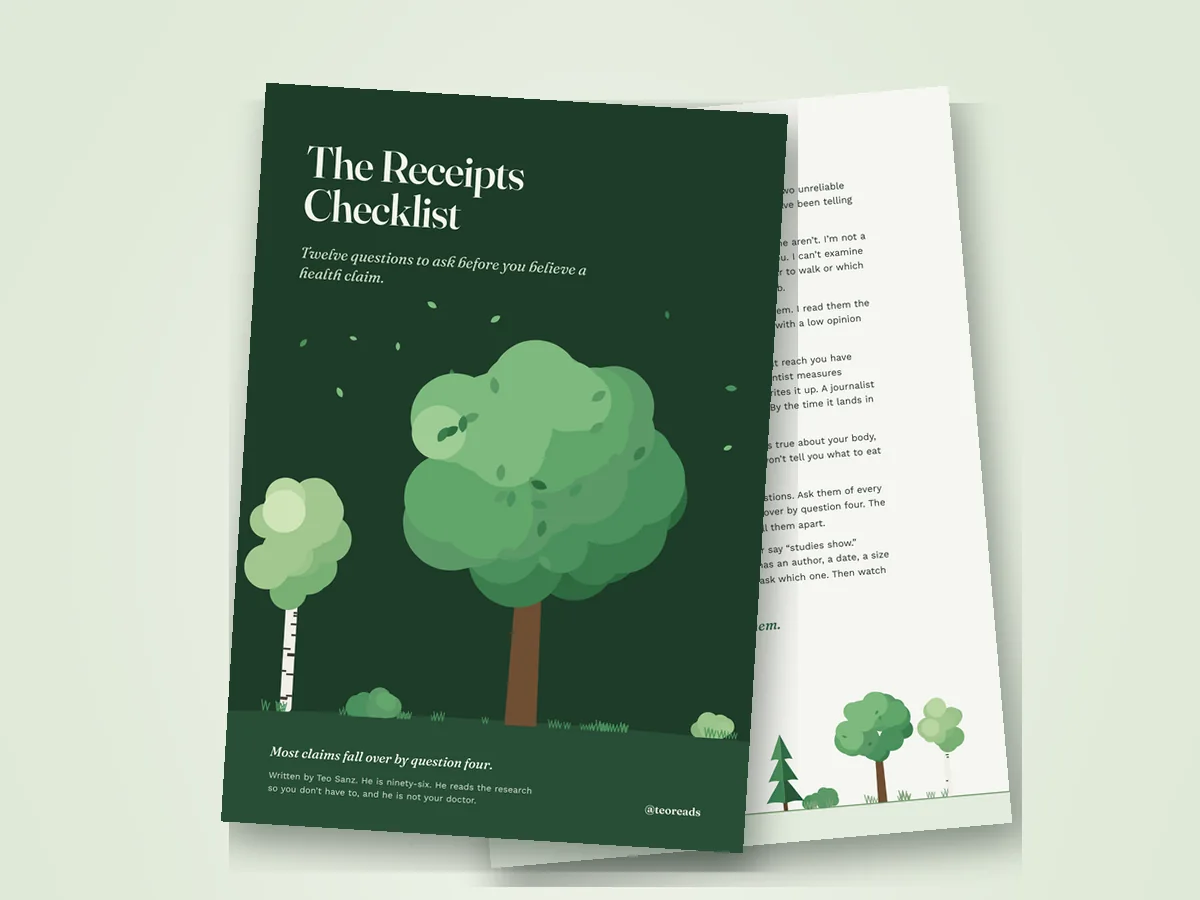
The Receipts Checklist
Twelve questions to ask before you believe a health claim, each with a real case, the paper to look up and the red flag that gives it away.
Download
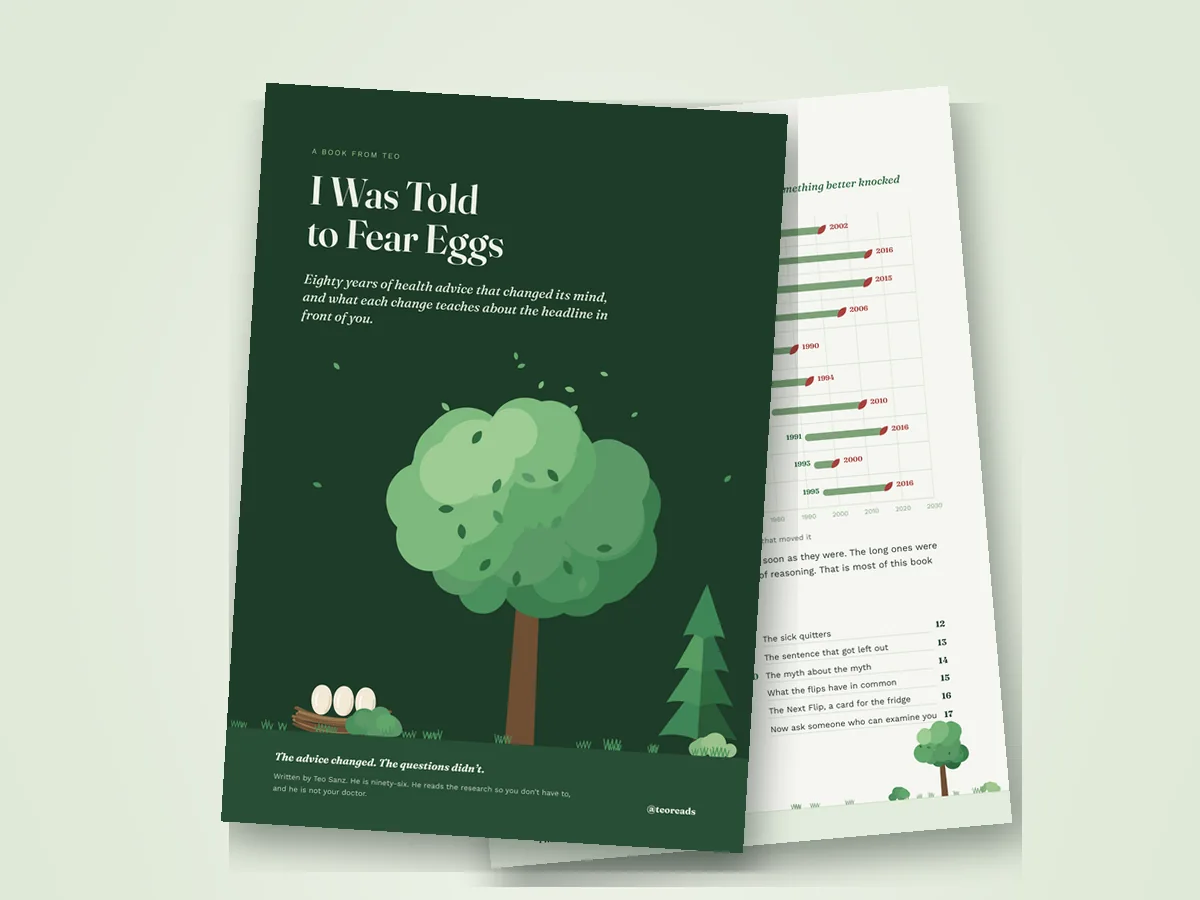
I Was Told to Fear Eggs
Ten pieces of health advice that changed their minds, what each one stood on, and how to read the next flip. No diet tips. Every source is real.
Download
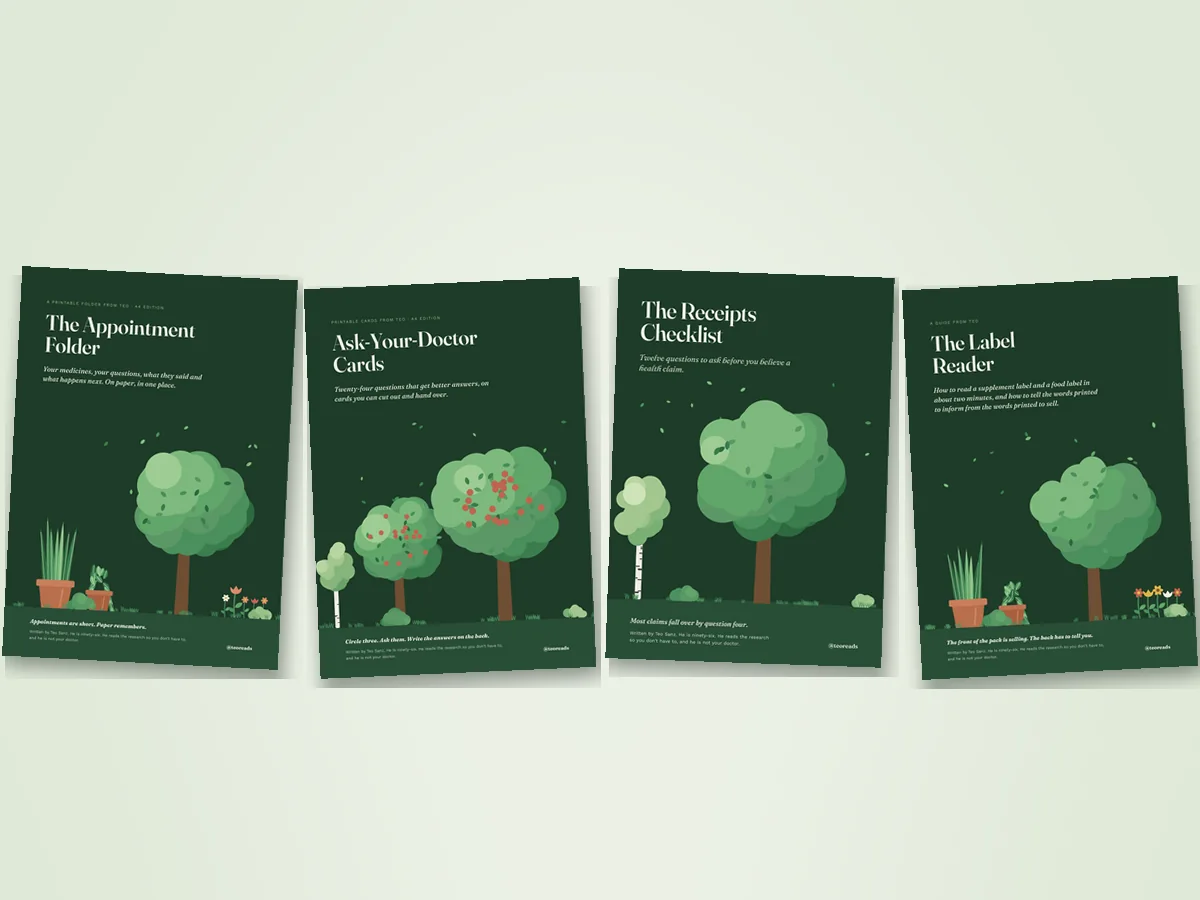
The Parents Pack
For the family member who goes to the appointments: the folder, the question cards, the label reader and the receipts checklist, in one pack.