What's inside
- The Twelve Questions: the whole Receipts Checklist on one page
- The Two Numbers: risk shown as people, with one subtraction and one division
- The Evidence Ladder: from a cell in a dish to a review of trials, drawn as a tree
- Before you share a health headline: five quick checks and their red flags
- One 4-page PDF, A4 portrait, sharp up to A3
Look inside
Real pages from the file. Tap one to see it larger.
About it
Four posters for the wall where people argue about health. Each one is a single page in my usual greens, with more trees than strictly necessary.
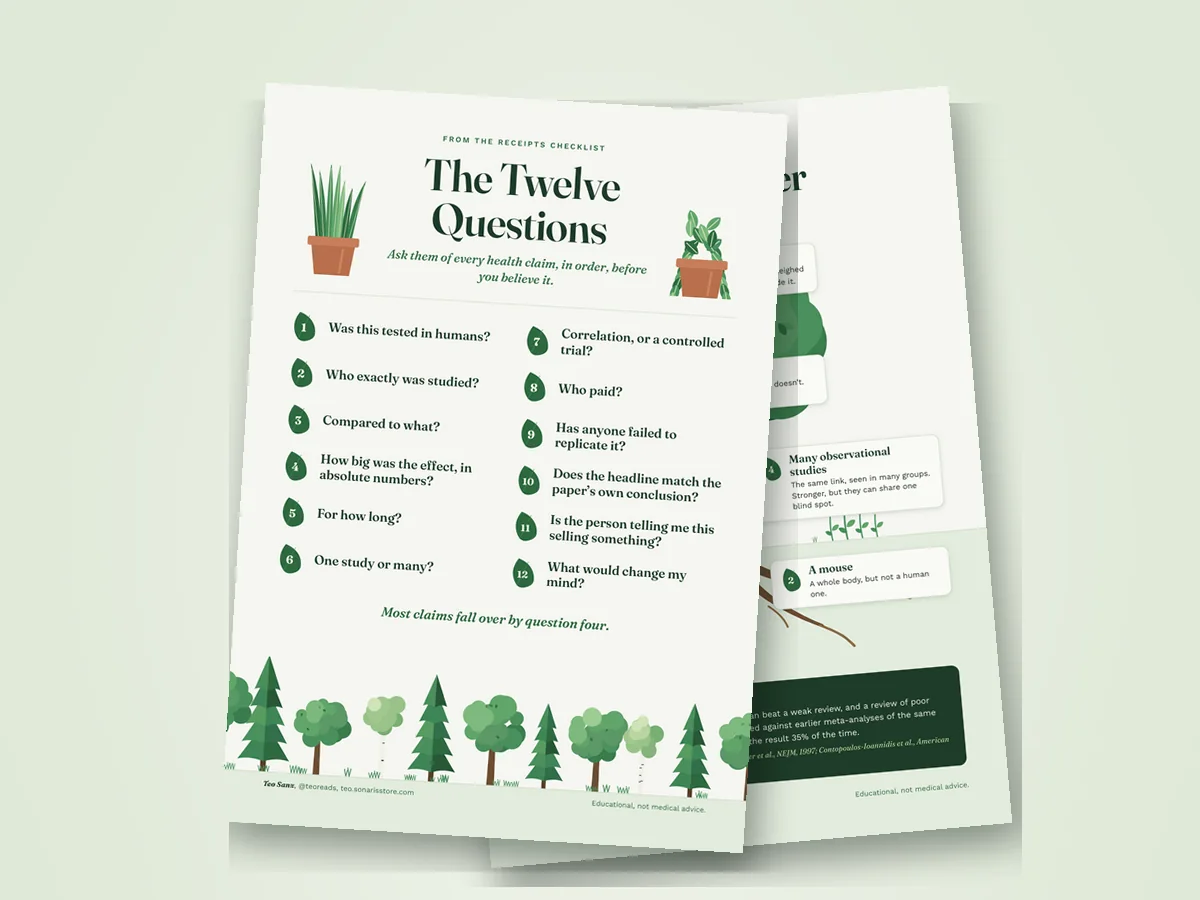
The Twelve Questions. Every question from The Receipts Checklist, in order, on one page. Ask them of a health claim before you believe it. Most claims fall over by question four.
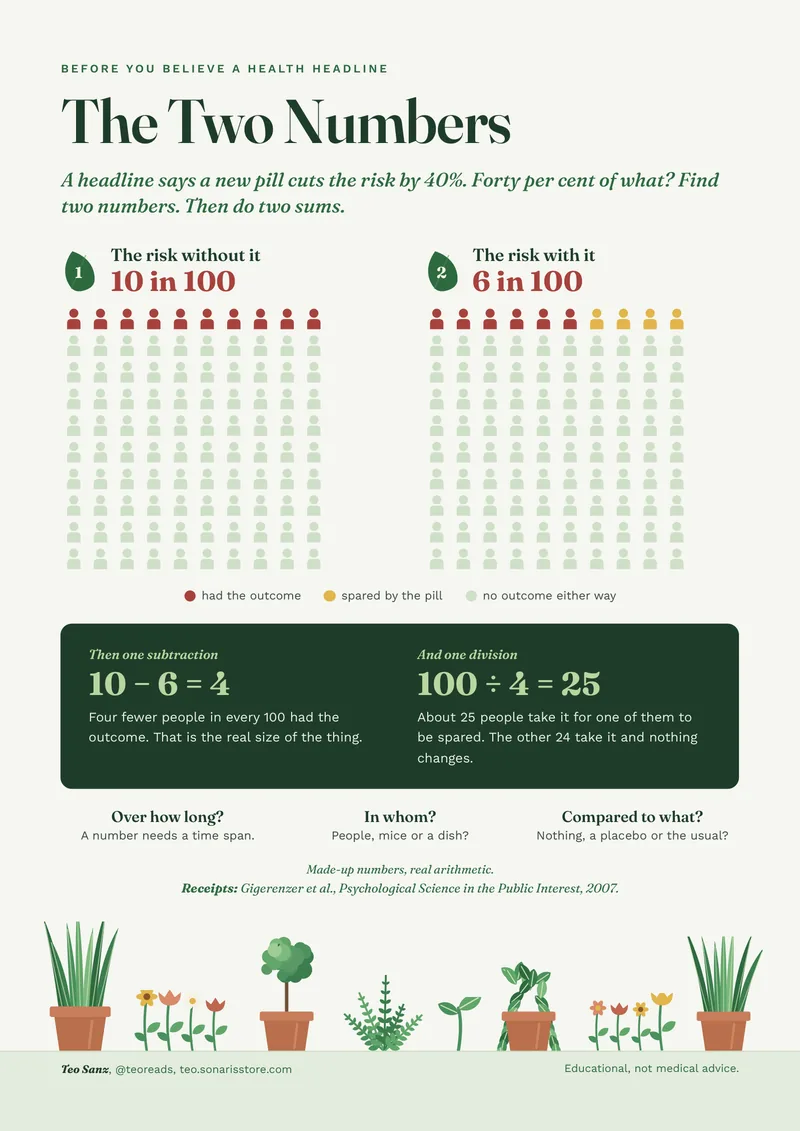
The Two Numbers. A headline says a pill cuts the risk by 40%. Forty per cent of what? Two grids of a hundred people show the risk without it and the risk with it. Then one subtraction and one division tell you how many people it really changes. The numbers are made up. The arithmetic is not.
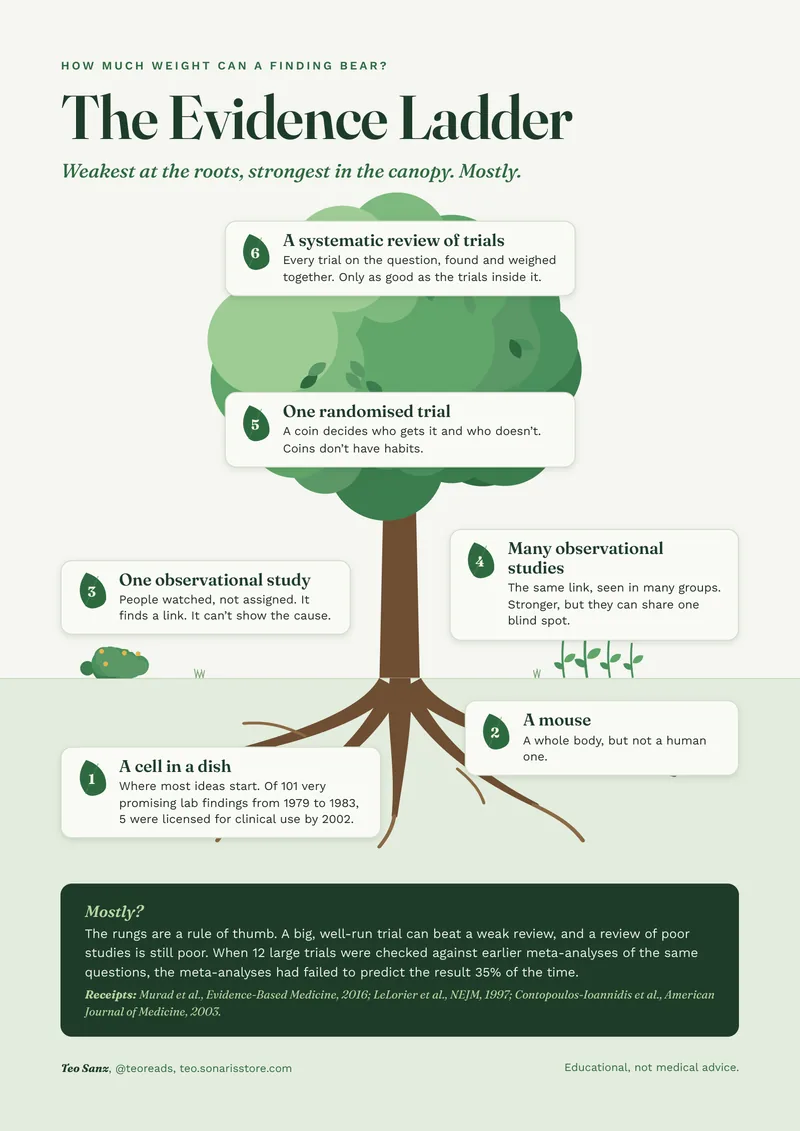
The Evidence Ladder. From a cell in a dish and a mouse, up through one observational study and many, to one randomised trial and a systematic review of trials, drawn as a tree from the roots to the canopy. With the honest footnote: a big, well-run trial can beat a weak review.
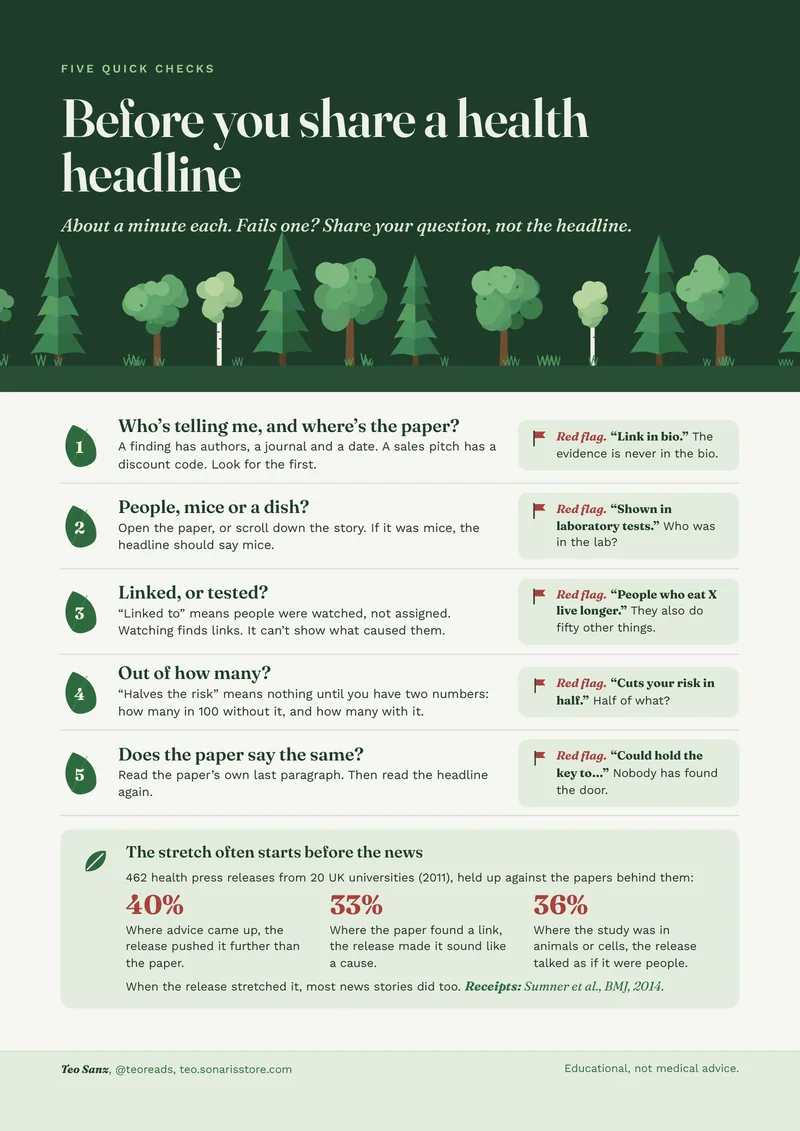
Before you share a health headline. Five quick checks, each with the red flag phrase that gives a headline away, and what a study of 462 university press releases found about where the stretching starts.
Every real number on them comes from a published paper, named so you can read it yourself. They're A4 portrait and print cleanly at A3.
They won't tell anyone what to eat, take or stop. Hang them where the news gets read. A room with a ladder on the wall is harder to fool.
A page from it
A mouse. A whole body, but not a human one.
One randomised trial. A coin decides who gets it and who doesn’t. Coins don’t have habits.
Mostly? The rungs are a rule of thumb. A big, well-run trial can beat a weak review, and a review of poor studies is still poor.
Questions
What sizes can I print?
Colour or black and white?
Can I print them for a classroom or an office wall?
Is this medical advice?
Are the numbers real?
Do I need The Receipts Checklist as well?
Free reading on this
- “Linked to” is not “causes”: correlation and causation in health newsWhy people who do one thing differ in other ways, how that fooled a generation of doctors, and the one question that separates a link from a cause.
- 12 questions to ask before you believe a health claimWas it tested in humans? Compared to what? Who paid? Twelve questions that take most health claims apart, in the order to ask them.
- Mice are not small people: what “tested in the lab” really meansA result in a dish or a mouse is where research starts, not where it ends. How to tell how far a health claim has actually travelled.
Also in the shop
Download
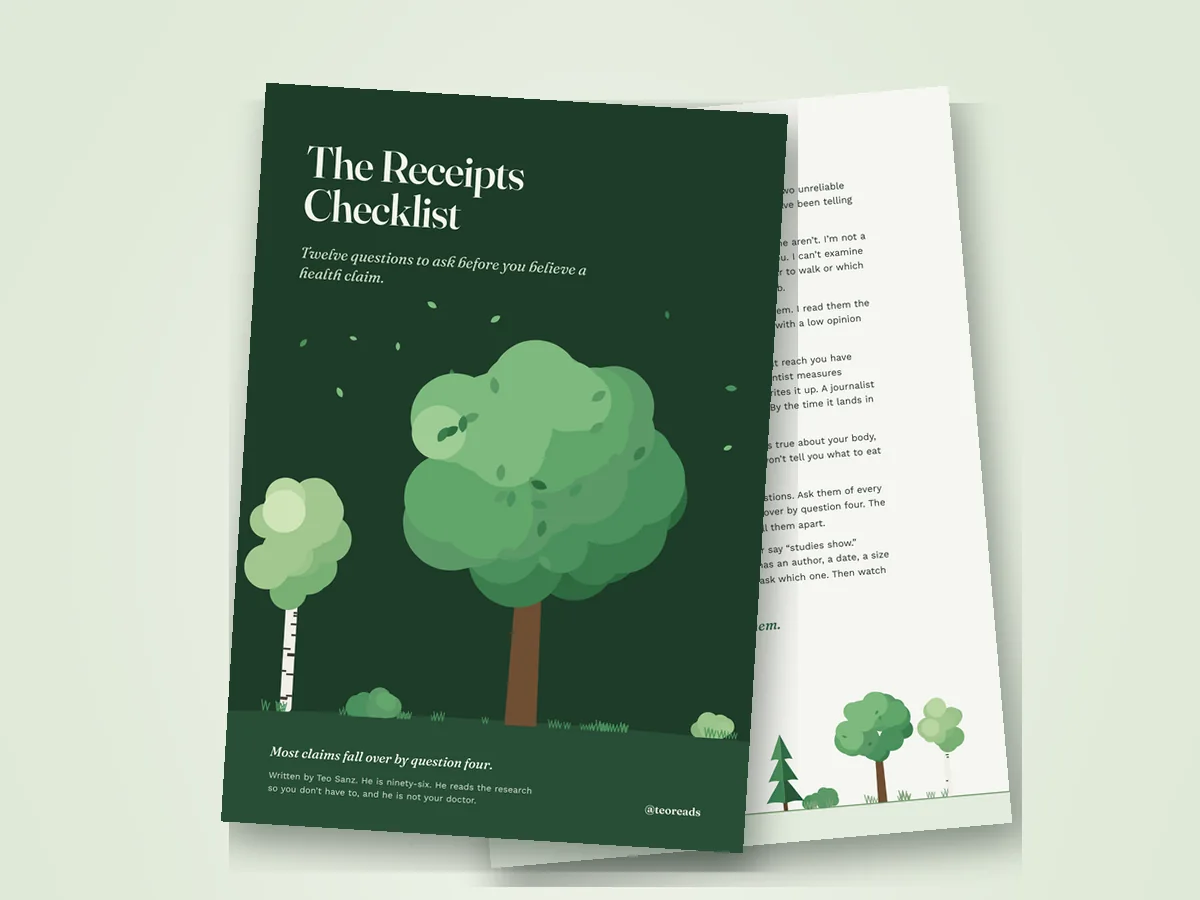
The Receipts Checklist
Twelve questions to ask before you believe a health claim, each with a real case, the paper to look up and the red flag that gives it away.
Download
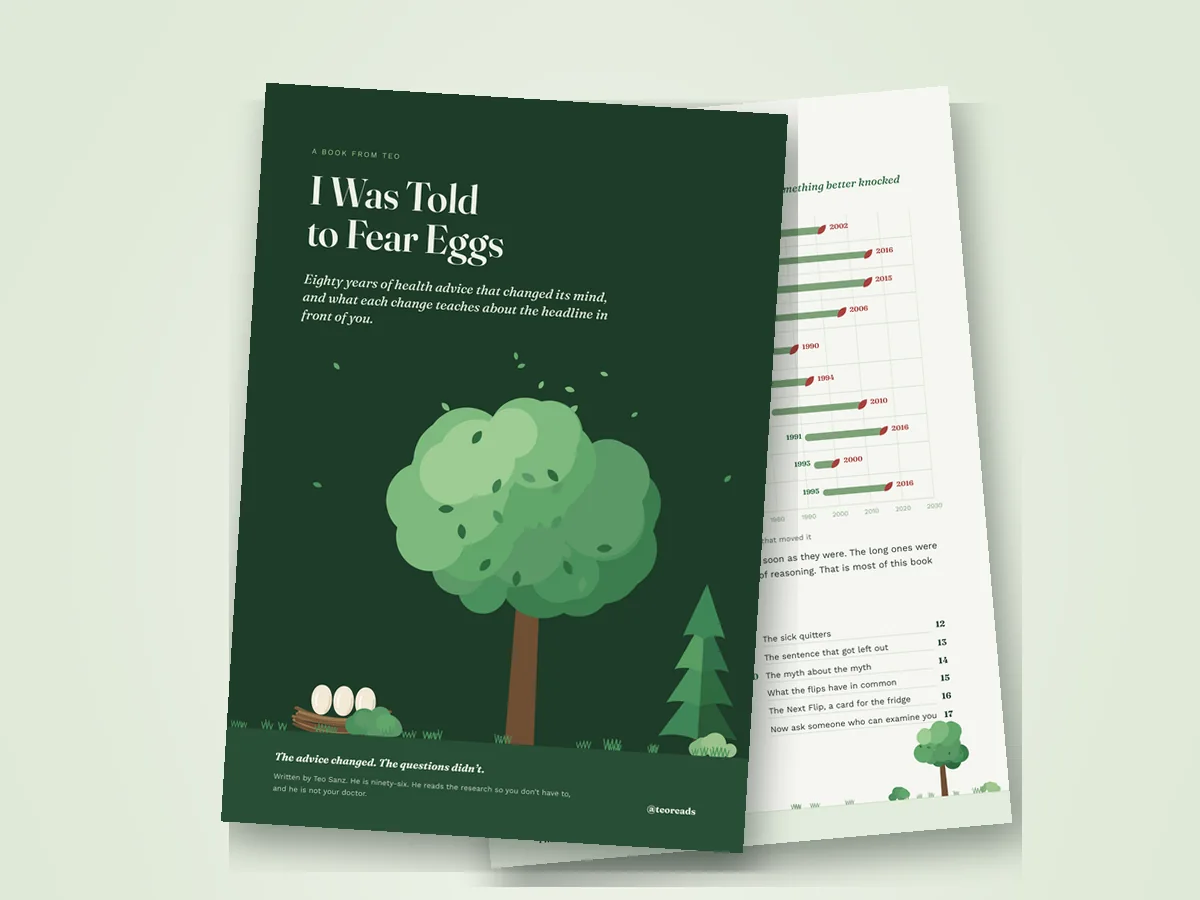
I Was Told to Fear Eggs
Ten pieces of health advice that changed their minds, what each one stood on, and how to read the next flip. No diet tips. Every source is real.
Download
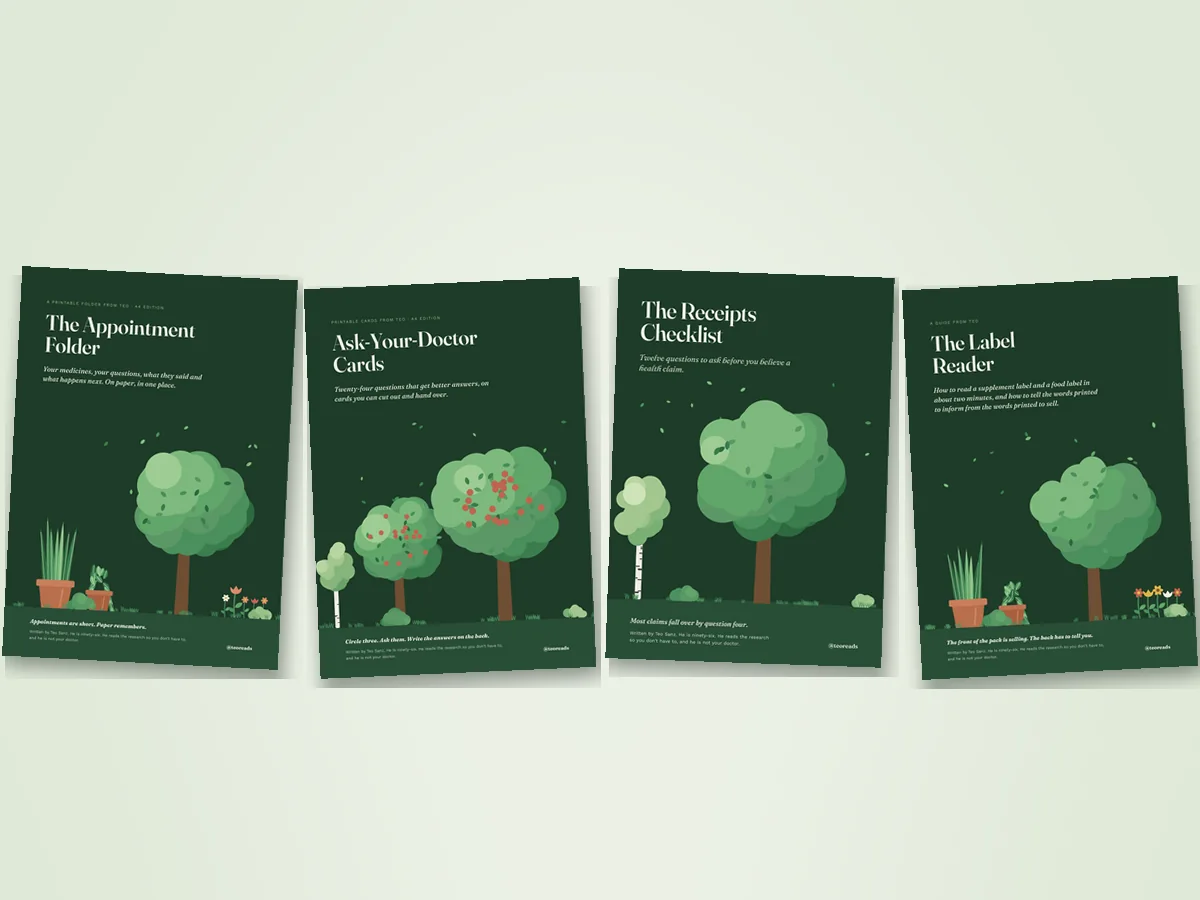
The Parents Pack
For the family member who goes to the appointments: the folder, the question cards, the label reader and the receipts checklist, in one pack.